The Medicines and Healthcare products Regulatory Agency (MHRA) is regulating technologies that the NHS is not yet equipped to deliver, from point-of-care manufacturing to AI now being tested in live NHS sandboxes, whilst also working with the Food and Drug Administration (FDA), Singapore and other global regulators for one evidence package to multiple markets. Its role is shifting from approving products to orchestrating the system around them, and because much of that system is still being built, developers who engage early have a real chance to shape the rules their products will later be judged against.
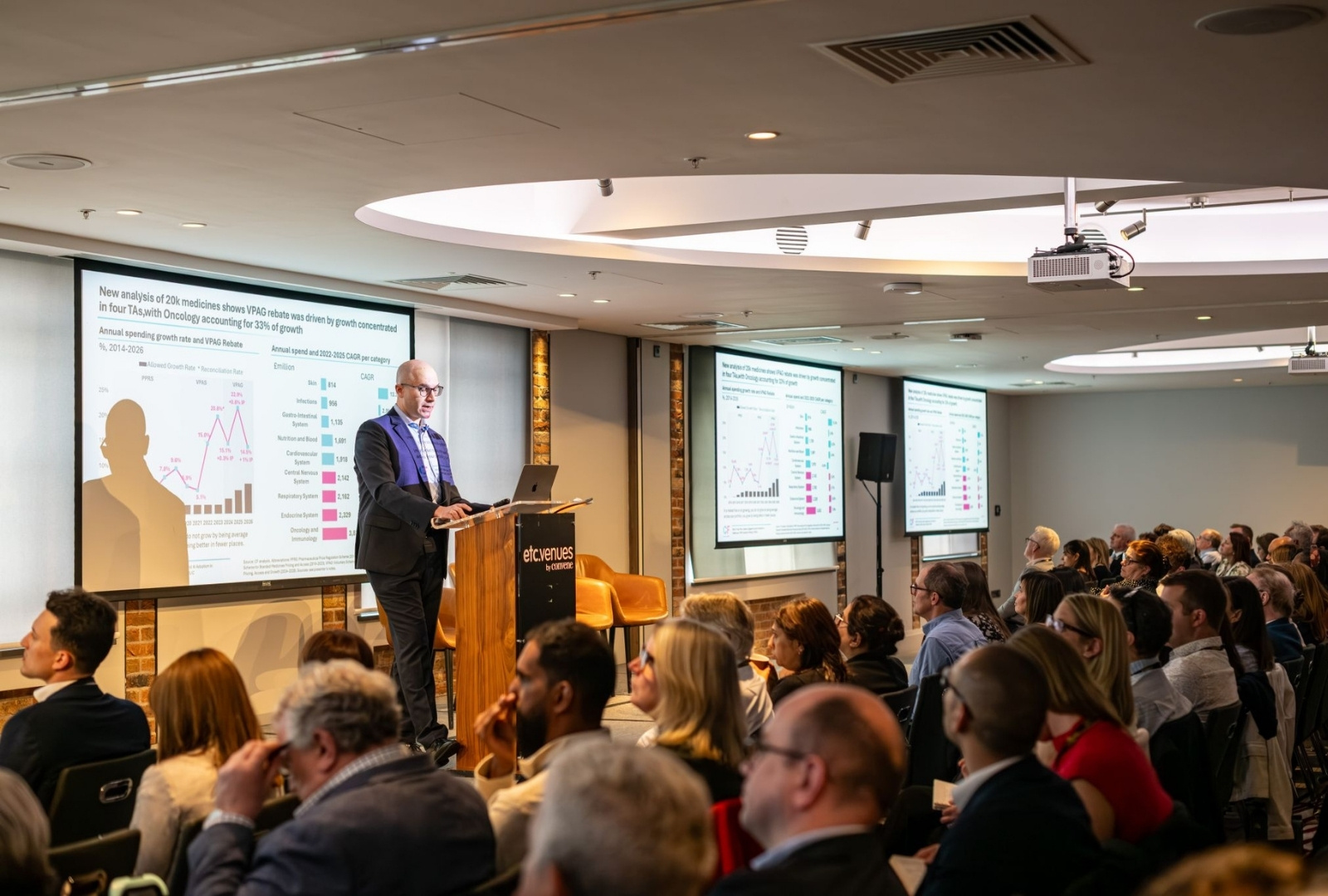
That was the message from James Pound, Interim Executive Director of Innovation and Compliance at the MHRA, when he set out the agency’s thinking on MHRA regulatory innovation at the 21 September EMIG Quarterly meeting. He was careful to present it as work in progress rather than settled policy, and that caveat is worth keeping. The direction, though, is already legible in what has been legislated and launched over the past 18 months.
Our assessment is that a UK marketing authorisation is no longer the product of a single agency acting in isolation. It is the output of a distributed system comprising the MHRA, the HTA bodies, NHS England and the devolved administrations, academic regulatory science centres, and an increasingly formalised set of bilateral relationships with the FDA, Singapore’s Health Sciences Authority and other national regulators. For mid-cap developers operating across the UK and Europe, this alters both the set of counterparties requiring engagement and the point in development at which that engagement must begin.
MHRA internal readiness for new regulatory challenges
Two conditions were critical to delivering on this vision, and both now hold:
- Demonstrable operational performance. After acknowledged deficiencies in trial approvals, licensing and inspections, the agency reports meeting or exceeding every statutory target in 2025/26 and closing the year in surplus, with study set-up times under combined safety and ethical review down from 169 to 122 days. Without that baseline of throughput and predictability, no regulator can credibly ask sponsors to commit development resource to novel pathways.
- A statutory base already in force, not in consultation. Decentralised manufacture regulations, covering point of care and modular models, took effect on 23 July 2025; post-market surveillance requirements for devices in Great Britain on 16 June 2025; and the largest package of clinical trials reform in two decades on 28 April 2026, with a five-year MHRA strategy to 2030 to follow. Each is enacted law against which development programmes can be designed, rather than policy intent.
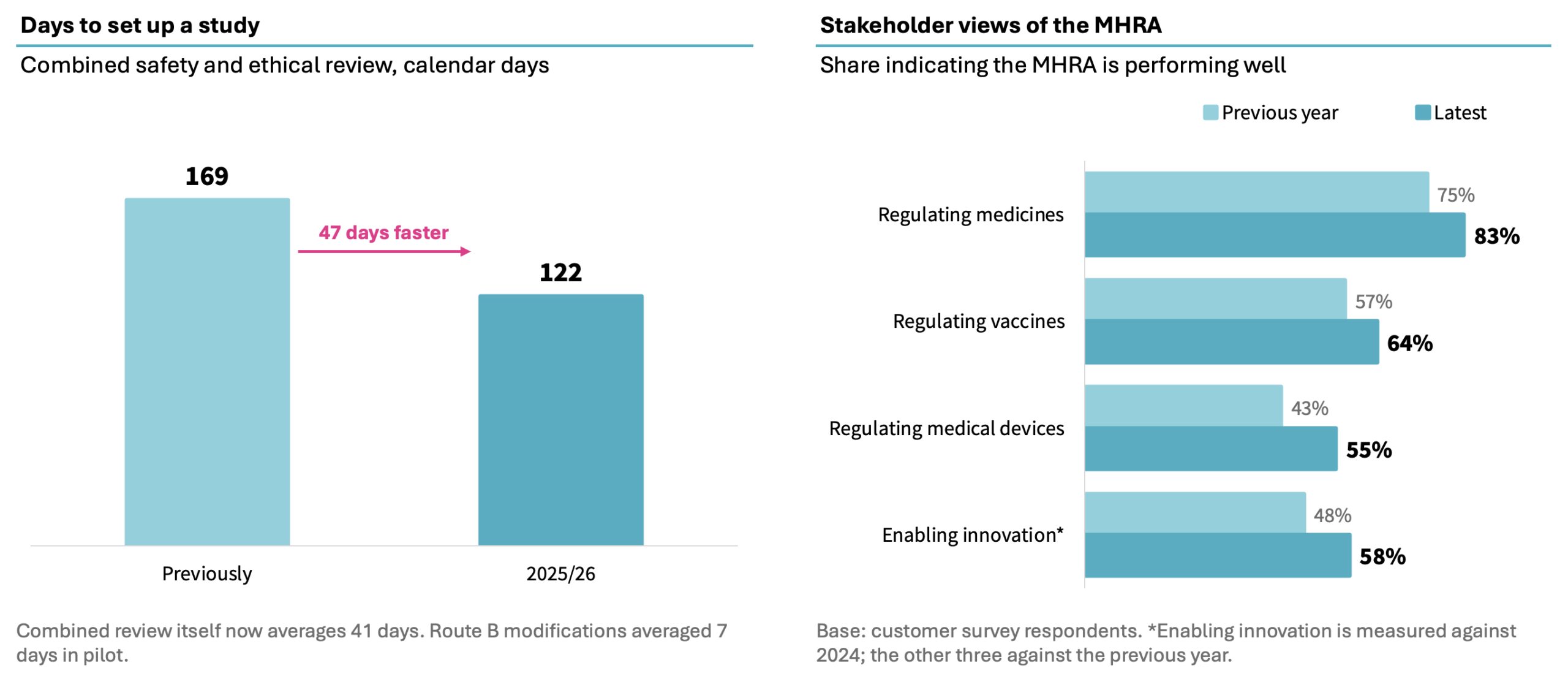
Exhibit 1. Consistent delivery came first: approval times are down and confidence in the regulator is up
Four enablers, still being built, and they run in sequence
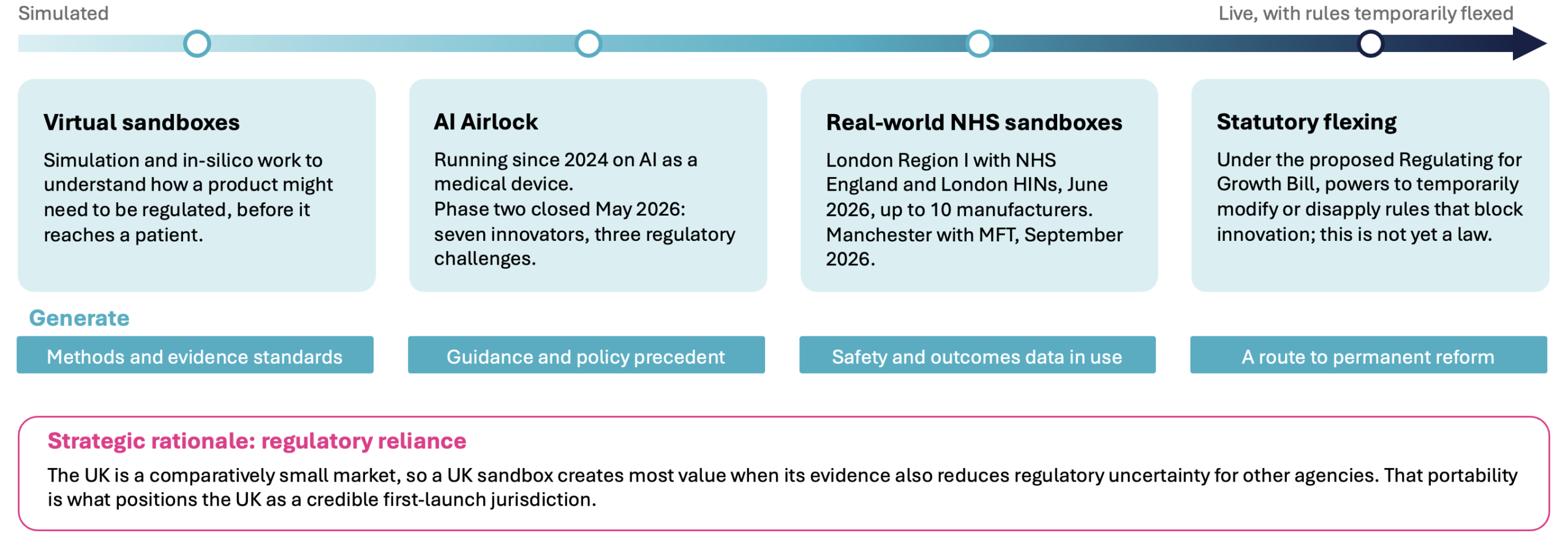
Exhibit 2. Regulatory sandboxes run on a spectrum, from simulation to live use with rules flexed
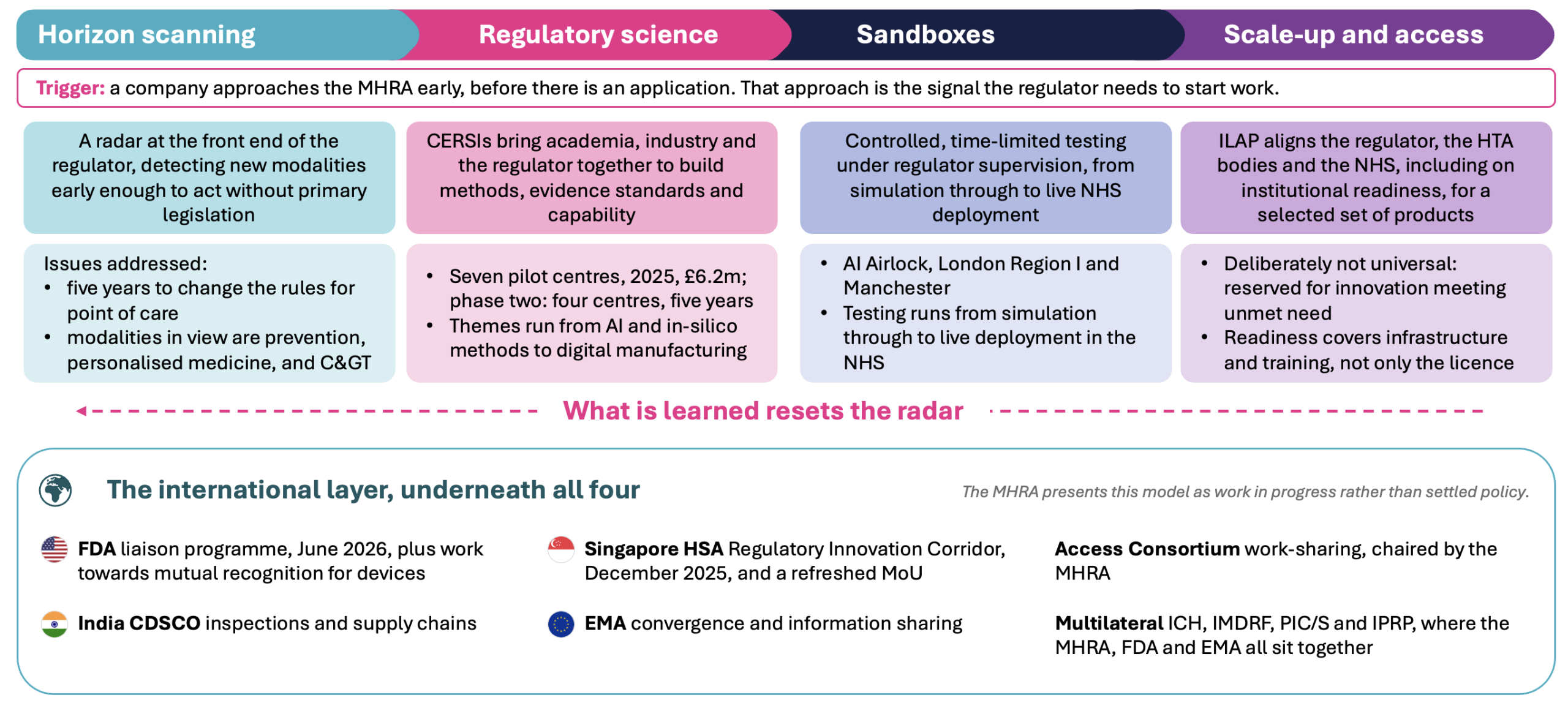
Exhibit 3. The MHRA innovation agenda runs as a sequence and is influenced by international partnerships
The dependency between them matters more than any one enabler. Horizon scanning feeds regulatory science; regulatory science feeds the sandboxes; and the sandboxes exist so that when a novel product arrives, the groundwork for adapting the rules is already laid. None of the four is complete, each is being built while in use, and the specification of all four is still open to influence. That is the case for engaging early: not merely to secure a place, but to shape the framework against which a product will later be assessed.
The international layer
The MHRA and FDA announced a liaison programme on 15 June 2026, establishing reciprocal liaison officer roles in each agency to support scientific exchange and faster coordinated responses on emerging questions. It builds on an April 2026 commitment to align medical device regulation and explore future mutual recognition mechanisms. With Singapore, the Regulatory Innovation Corridor launched on 12 December 2025 gives developers a coordinated fast-track to engage both regulators at once and seek joint early advice, reducing duplication. A refreshed memorandum of understanding followed, and almost 40 new active substances have now been approved through Access Consortium work-sharing. Engagement with India’s Central Drugs Standard Control Organisation (CDSCO) reflects the scale of that market and its manufacturing investment. The multilateral fora, the International Council for Harmonisation (ICH), the International Medical Device Regulators Forum (IMDRF), the Pharmaceutical Inspection Co-operation Scheme (PIC/S) and the International Pharmaceutical Regulators Programme (IPRP), include the FDA, EMA and MHRA together, and were described as the natural route to alignment when regulatory centres of gravity diverge. ICH M15, the first harmonised guideline on model-informed drug development, shows that route working. The MHRA sat on the drafting group, ICH adopted the guideline in January 2026, and the FDA and EMA implemented it in June and July 2026 respectively. MHRA assessors have described UK practice as aligned with M15, so a sponsor can plan one modelling and simulation package, including how the risk of each model is rated, against a single framework across all three agencies.
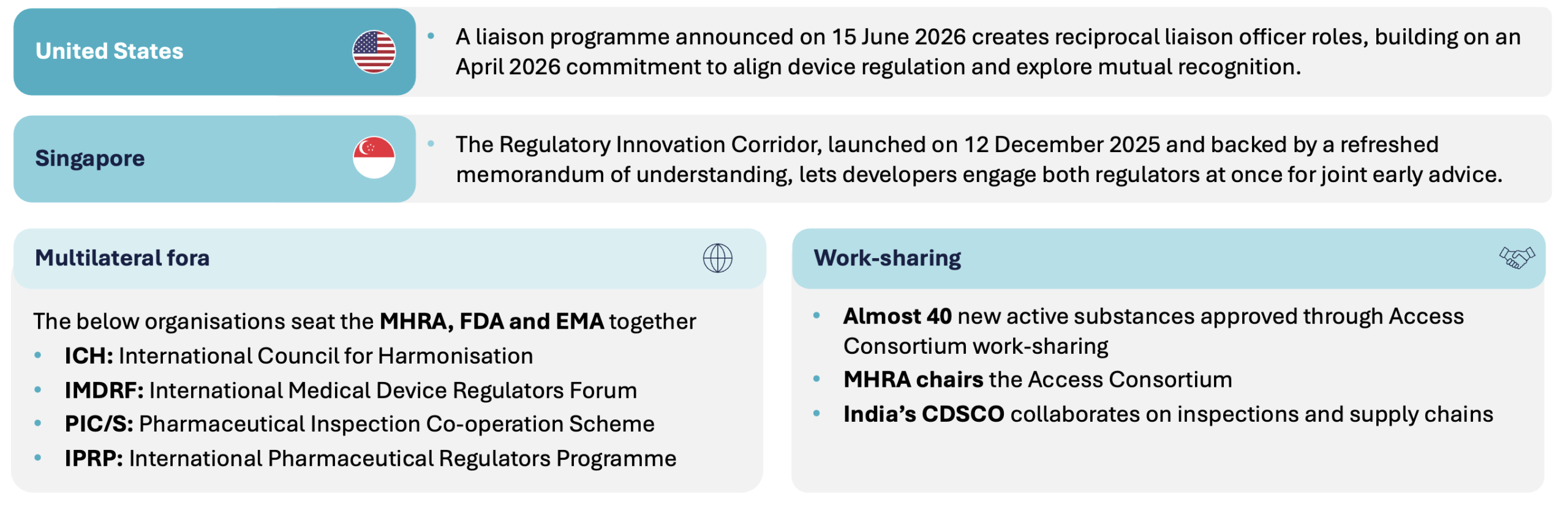
Exhibit 4. UK evidence is designed for recognition by international regulators
What this means for pharmaceutical and devices developers
- Engage before you have an application. The clearest message of the session was that an early approach on a novel technology is the signal the regulator needs to start work, potentially simulating around a product or building a bespoke offer, well ahead of submission. A dedicated navigation team exists for exactly this. Companies that arrive at the point of filing have already forfeited the most valuable part of the offer.
- Treat sandboxes and CERSIs as evidence infrastructure, not a one-off pilot. A place in a live NHS sandbox generates safety and outcomes data under regulator oversight, which is the evidence HTA bodies and commissioners will likely ask for later; evidence that outlast the pilot itself.
- Sequence the UK against a second regulator deliberately. With the FDA liaison programme and the Singapore corridor both operating, the question is no longer whether to file in the UK first, but which pair of submissions can share one evidence package.
The trade-off for SME and mid-cap companies is significant. Engaging early and consistently with the MHRA, NICE and NHS partners takes up regulatory and medical affairs time that most resource plans don’t budget for, and the payoff typically comes two to three years later. On balance, it is still worth it. The alternative is discovering, only after authorisation and at the point of launch, that the NHS doesn’t have the infrastructure to adopt a new technology. At that stage, the enabling infrastructure has not been established, and access is delayed for patients.
As was noted in closing, much of this would have been a hard sell ten years ago. Scientific and technological change has since outpaced the frameworks built to assess it, and that pressure is global: regulators that do not adapt become the rate-limiting step between a viable product and the patients indicated for it. Adaptation on both sides, by the agency and by industry, is what converts regulatory innovation into earlier access.
FAQs
About the authors

Ben Richardson
Ben Richardson is a Managing Partner at CF, leading Life Sciences and Data Innovation. With two decades of experience, he has worked with health systems and life sciences companies globally, focusing on strategy, transformation, and development. Ben has contributed to primary care, diabetes, cardiovascular, cancer, mental health, and population health management. Since 2014, he has helped CF become an award-winning healthcare company in management consulting and data services.

Dr Ioannis Katsoulis
Dr Ioannis Katsoulis is Director of Life Sciences at CF, where he works with pharmaceutical companies, trade associations, regulators HTA bodies and charities on UK market access, pricing and adoption of new treatments. He has spent over 14 years in global value and access consulting, drawing on health technology assessment, health economics and real-world evidence to help innovative medicines reach the patients who need them.

Dr Dorinda Hickey
Dr Dorinda Hickey is an Associate at CF, where she focuses on market access, pricing and reimbursement, health technology assessment and payer engagement for life sciences organisations and charities. She has over 15 years in market access consulting, most recently as Executive Director of OPEN Health’s Evidence and Access practice. Before that she spent 17 years in senior commercial roles at Novartis (formerly Sandoz UK). She brings both an industry and an NHS perspective to how new treatments reach patients.
About CF
CF is a leading consultancy dedicated to making an enduring impact on health and healthcare. We work with leaders and frontline teams to improve health, transform healthcare, embed life science innovation and boost growth through investment. With unmatched access to UK healthcare data and award-winning data science expertise, our team are a driving force for delivering positive and meaningful change.
Sources
- National Commission into the Regulation of AI in Healthcare, recommendations, GOV.UK, 10 September 2026.
- MHRA Results and Forecast 2025/26, GOV.UK, May 2026.
- Launch of clinical trial reforms, GOV.UK and HRA, 28 April 2026.
- Human Medicines (Amendment) (Modular Manufacture and Point of Care) Regulations 2025, SI 2025/87, in force 23 July 2025.
- Medical Devices (Post-market Surveillance Requirements) (Amendment) (GB) Regulations 2024, SI 2024/1368, in force 16 June 2025.
- CERSI programme, UKRI and Centres of Excellence for Regulatory Science and Innovation
- Digital CMC CERSI, University of Strathclyde and CMAC.
- AI Airlock: the regulatory sandbox for AIaMD, GOV.UK collection.
- AI Airlock funding uplift, Digital Health, April 2026.
- London Region I sandbox, announced 10 June 2026, Fieldfisher analysis.
- Manchester Sandbox with Manchester University NHS Foundation Trust, September 2026.
- Regulating for Growth Bill, statutory sandbox powers, DBT, July 2026, Osborne Clarke Regulatory Outlook.
- ILAP relaunch and Target Development Profile, GOV.UK.
- MHRA and FDA liaison programme, GOV.UK, 15 June 2026.
- MHRA and FDA medical device cooperation, April 2026, MedTech Dive.
- UK and Singapore Regulatory Innovation Corridor, HSA, 12 December 2025.
- Refreshed MHRA and HSA memorandum of understanding, and Access Consortium work-sharing, GOV.UK.
- UK regulator expands team to assess computer-simulated trials, Pink Sheet, 22 October 2025.
- MHRA guidance on non-animal data in marketing applications, RAPS, March 2026.
- MHRA draft guideline on external control arms based on real-world data, consultation opened May 2025, Baker McKenzie analysis.
- Synthetic data generation using generative AI, including CPRD synthetic data validation, Duke-Margolis, 2025.
- AI Airlock phase two expansion backed by the Regulatory Innovation Office, GOV.UK, June 2025.
- ICH M15 guideline on model-informed drug development adopted, ICH, January 2026.
- Quantitative medicine to support drug development and regulatory decisions: a UK regulatory approach informed by ICH M15, PMC.
- FDA M15 guidance for industry, Federal Register, 3 June 2026; EMA ICH M15 Step 5, in effect 23 July 2026.