Early evidence links NHS-industry partnerships with improved prescribing practices and better health outcomes for patients.
Partnerships between the NHS and the pharmaceutical industry aim to support NHS priorities, enhance patient outcomes, optimise resource use, and reduce care disparities across the UK.
Our latest report with Association of the British Pharmaceutical Industry (ABPI) uses published NHS and industry data to examine how partnerships can achieve shared goals of improving population health and enhancing healthcare experiences. While past successes have been demonstrated through individual case studies, this report aims to explore their clinical and performance impacts at a national, aggregate level within a select number of therapy areas.
Executive summary
Introduction
Partnerships between the NHS and the pharmaceutical industry aim to support NHS priorities, enhance patient outcomes, optimise resource use, and reduce care disparities across the UK.
This report uses published NHS and industry data to examine how partnerships can achieve shared goals of improving population health and enhancing healthcare experiences. While past successes have been demonstrated through individual case studies, this report aims to explore their clinical and performance impacts at a national, aggregate level within a select number of therapy areas.
In 2023, the ABPI reported £24.9 million in UK collaborative efforts. Although modest, scaling these partnerships could deliver a triple win: better patient outcomes, more efficient NHS resource use, and clear impact evidence for the industry. This report emphasises the added value of sustained partnerships, as evidenced by the fact that:
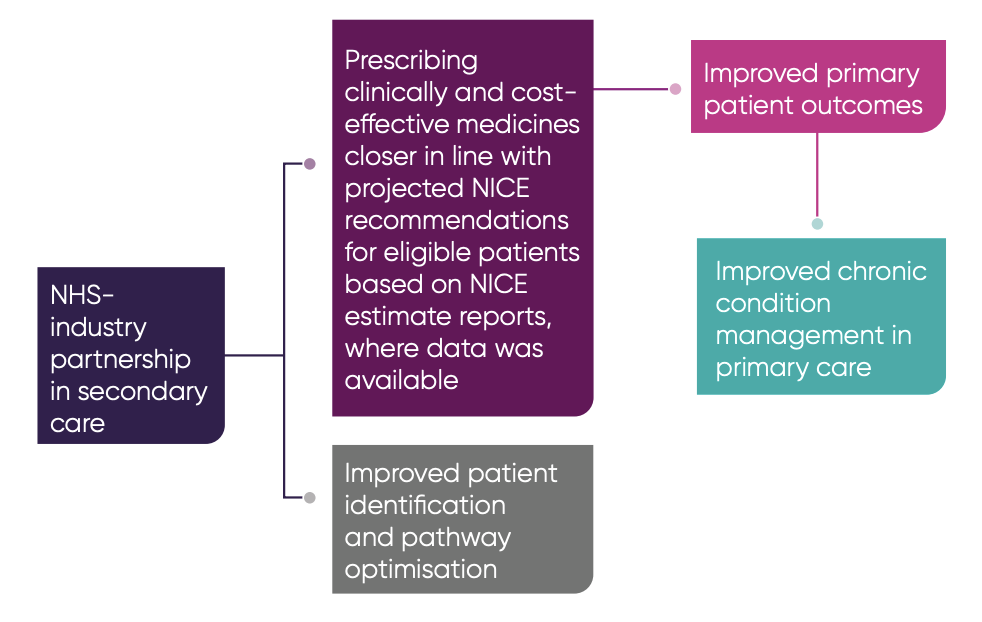
- partnerships in secondary care take place in trusts where prescribing clinically and cost-effective medicines is closer in line with projected NICE recommendations for eligible patients,2 and this could deliver improved health outcomes for patients (see pages 18–28 of the report for further details).
- partnerships in primary care take place where there is improved casefinding and disease management within their localities. (See page 30 of the report for further details).
- a growing body of evidence suggests that system level partnerships may help deliver improved health outcomes across the four nations of the UK (see pages of the report 33–39 for further details).
Acknowledging challenges in proving causality, CF employed statistical methods to aggregate and evaluate the impact of NHS-industry partnerships across the UK (see page 12 for further details). While this does not explore specific improvements in morbidity or mortality, this analysis serves as a foundation for policymakers and health leaders to assess the applicability and scalability of these findings in their regions and local systems.
With this new research, it is hoped that this paper can contribute to a new body of evidence to clearly outline the positive impact that NHS industry partnerships can play in supporting the NHS to deliver the best possible care for patients across the UK and understand the relationship between partnership working and improved patient outcomes.
Key findings
The overall findings of this report demonstrate that:
1. Partnerships in secondary care may help improve prescribing for eligible patients and this can deliver better health outcomes:
- Acute trusts that undertake partnerships are twice as likely to prescribe clinically and cost-effective medicines closer in line with projected NICE recommendations for eligible patients based on NICE estimate reports, and this can result in improved health outcomes. (see pages 18-19 of the report for further details).
- Compared with non-partnering trusts, those partnering with industry show a significantly stronger association (+59 per cent) between prescribing lipid-lowering therapies for hypercholesterolemia and improving cholesterol control (see page of the report 24 for further details).
- Compared with non-partnering trusts, the data suggests those partnering with industry have a stronger association (30 per cent) between prescribing blood glucose-lowering therapies for type 2 diabetes and improving blood glucose control for frail patients with diabetes (see page 26 of the report for further details).
2. Primary care networks (PCNs) that undertook partnerships observed improved health outcomes compared to non-partnering PCNs:
- There is emerging evidence that PCNs that undertake partnerships have a 28 per cent higher level of cardiovascular disease (CVD) control compared to the national average (see page 30 of the report for further details).
3. Systems that undertook partnerships observed improved health outcomes:
- There are good examples of system and place-level partnerships across the four nations that have resulted in improved case finding, effective prescribing, reduced waiting times, and improved disease control. One such example showcases a Health Board in Wales that undertook a partnership in head and neck cancer, which reduced diagnostic test turnaround times by 32 per cent (see page 34 of the report for further details).
Recommendations
In addition to outlining the quantitative impact of NHS-industry partnerships, this report also presents five actionable recommendations:
1. Secondary care
- Further research should be conducted to establish the direct causative relationship between partnership working and their impact on patient outcomes across the UK, as well as the improvements they may bring to NHS operational efficiencies.
2. Primary care
- The scale of partnerships taking place in primary care should be increased, to address unwarranted variations in the prescribing of clinically and cost-effective medicines.
- Partnerships in primary care settings should also be considered to help to identify at-risk patients, initiate treatment, rapid diagnosis, improve chronic disease management and ultimately deliver better health outcomes and reduce health inequalities.
3. System/place
- To strengthen the impact of NHS-industry partnerships, industry stakeholders and NHS leaders should regularly monitor partnerships documented in the ABPI’s Library of Case Studies to scale the most impactful projects.
4. National
- The Innovation Scorecard Estimates Report is an important resource for improved support in identifying areas where prescribing for some indications is misaligned with NICE recommendations. This dataset should be expanded to enable the identification of more indications at all relevant geographic levels. This will allow for improvements in the visibility of local variation.
What are NHS-industry partnerships?
What forms of NHS-industry partnerships exist?
The ABPI Code of Practice (see Appendix 1 of the report for further information) defines two main types of partnerships between local NHS organisations and pharmaceutical companies.
Collaborative working refers to pharmaceutical companies working with other organisations to deliver initiatives which either enhance patient care, are for the benefit of patients, or alternatively benefit the National Health Service (NHS) and maintain patient care as a minimum.
As stipulated in the ABPI Code of Practice, Collaborative Working must:
- not constitute an inducement to health professionals or other relevant decision-makers to prescribe, supply, recommend, buy or sell a medicine
- be carried out in an open and transparent manner
- be prospective in nature
- be documented with a formal written agreement which is kept on record
- have a summary of the Collaborative Working agreement publicly available before arrangements are implemented.
Collaborative working, including its implementation, must also have and be able to demonstrate the pooling of skills, experience, and/or resources from all the parties involved for the joint development and implementation of patient and/or healthcare-centred projects. There must be a shared commitment to successful delivery from all parties, and each party must make a significant contribution.
Joint working is a form of Collaborative working between one or more pharmaceutical companies and the NHS is always patient-centred and is an acceptable form of Collaborative working providing it is carried out in a manner compatible with the ABPI code.
All partnerships which record a transfer of value must also be transparently reported and published on Disclosure UK (for further information on the Disclosure UK process, please refer to Appendix 2). Practical guidance on the implementation of NHS-industry partnerships, entitled “Accelerating Transformation: How to Develop Effective NHSIndustry Partnerships,” was published jointly by the ABPI and NHS Confederation in June 2024 and can be viewed here. See more on page 40.
Approach and methodology
This analysis investigated the relationship between partnerships, prescribing practices for eligible patients, and their impact on health outcomes. Using the framework below, CF analysed the correlation between NHS-industry partnerships and prescribing closer in line with projected NICE recommendations for eligible patients based on NICE estimate reports. Additionally, CF assessed the impact of these partnerships on health outcomes across healthcare settings in the UK. CF’s analysis concentrated on two priority therapy areas: cardiovascular (including hypercholesterolemia) and type 2 diabetes.
These areas were selected for several reasons:
- both are considered NHS priorities (such as through the NHS Long Term Plan).
- both have clearly defined, up-to-date, and recognised measures of outcomes in primary care data, such as the quality outcomes framework (QOF).
- there were a significant number of partnerships in the therapeutic area to aggregate and compare with non-partnering trusts (see page 15 for further details).
To support this evaluation, three research questions were identified:
- do NHS organisations that undertake partnerships deliver prescribing closer in line with projected NICE recommendations for eligible patients?
- do NHS organisations that partner have improved patient outcomes relative to those that do not?
- do NHS organisations that undertake partnerships deliver improved patient outcomes in specific therapeutic areas?

To undertake the collation of data, CF utilised AI to create an NHS-Industry partnership dataset
CF’s approach to collating partnership data
- CF aggregated published data across ABPI member organisations since 2019 related to NHS-industry partnerships.
- Data from each file was automatically analysed by artificial intelligence (AI) to extract relevant information related to the NHS organisation involved, the ABPI member the therapeutic area, and the intended benefits of the partnership for the NHS and patients.
- CF then manually verified that the output corresponded with disclosure data to validate the approach.
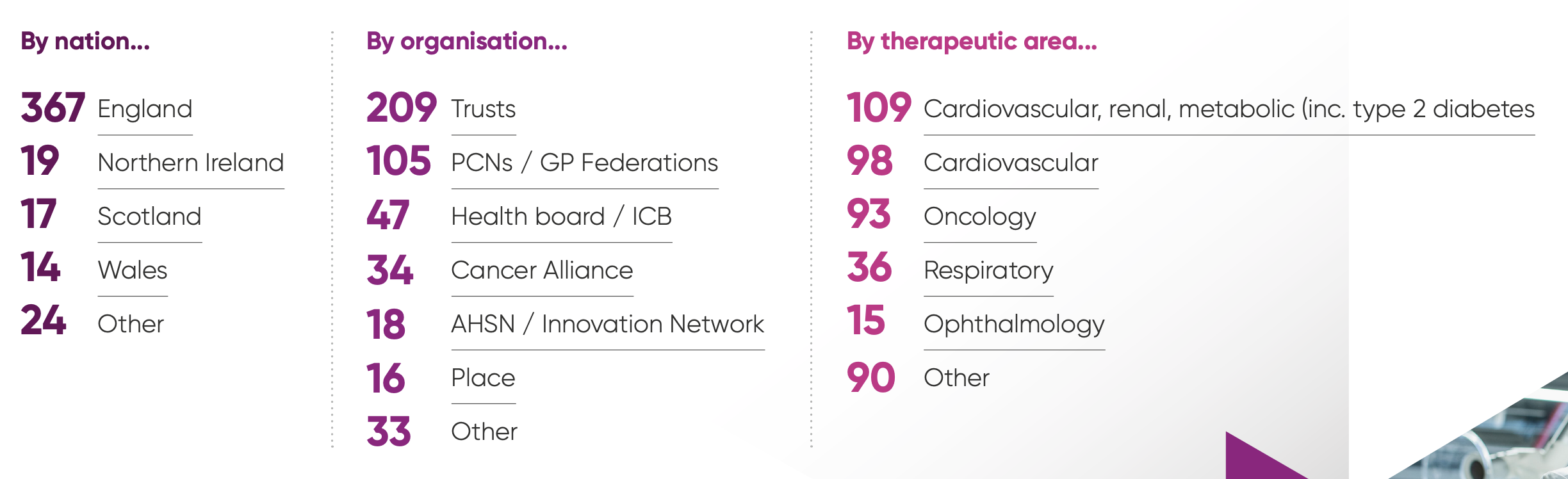
- CF has extracted data for 441 Joint Working and Collaborative Working projects (see page 15 for further details) which were validated against the disclosure data – with this dataset representing ~70 per cent of collaborative and Joint Working projects across the UK.3
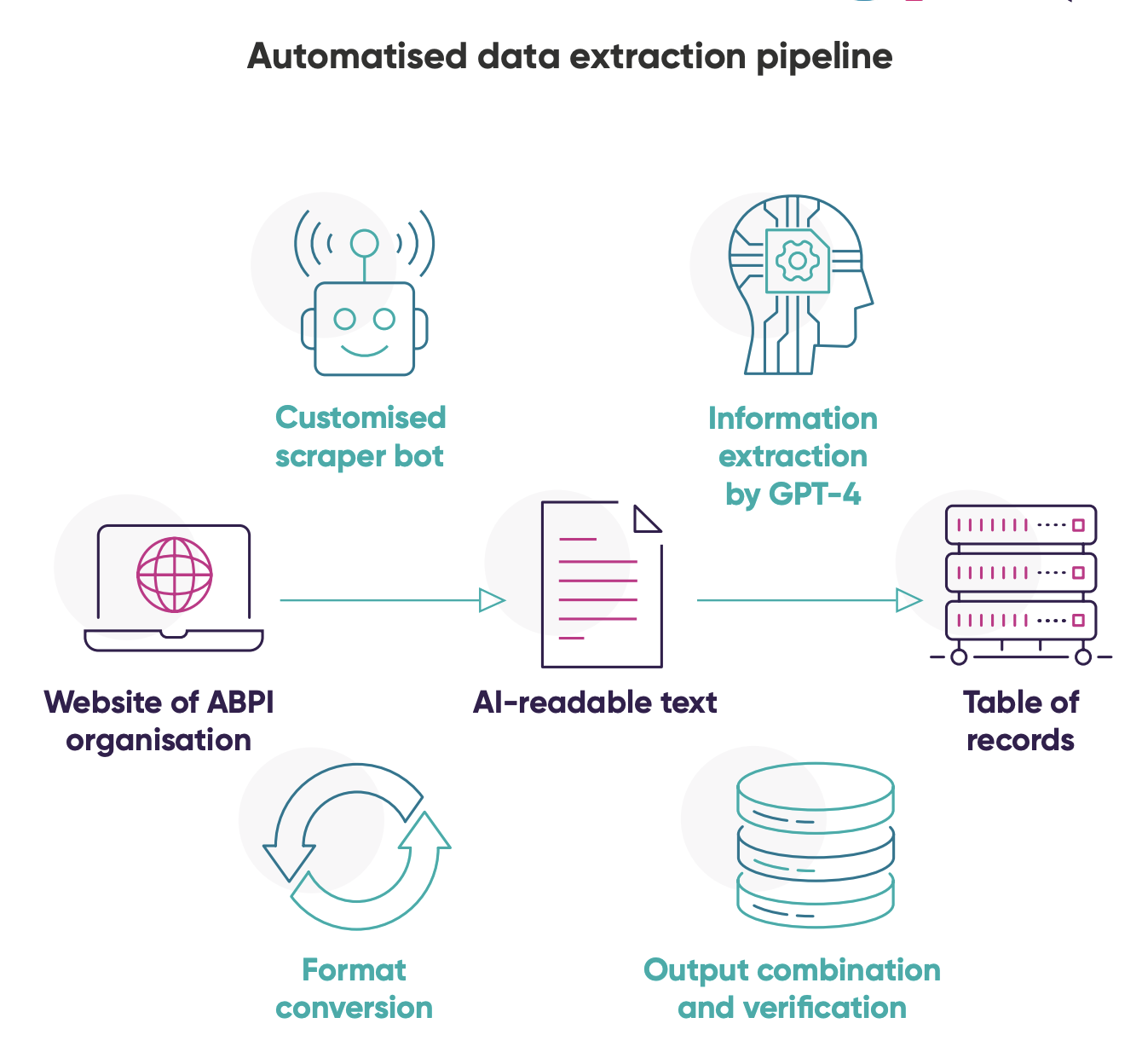
CF created a table of record to compare NHS organisations that partnered to organisations that did not
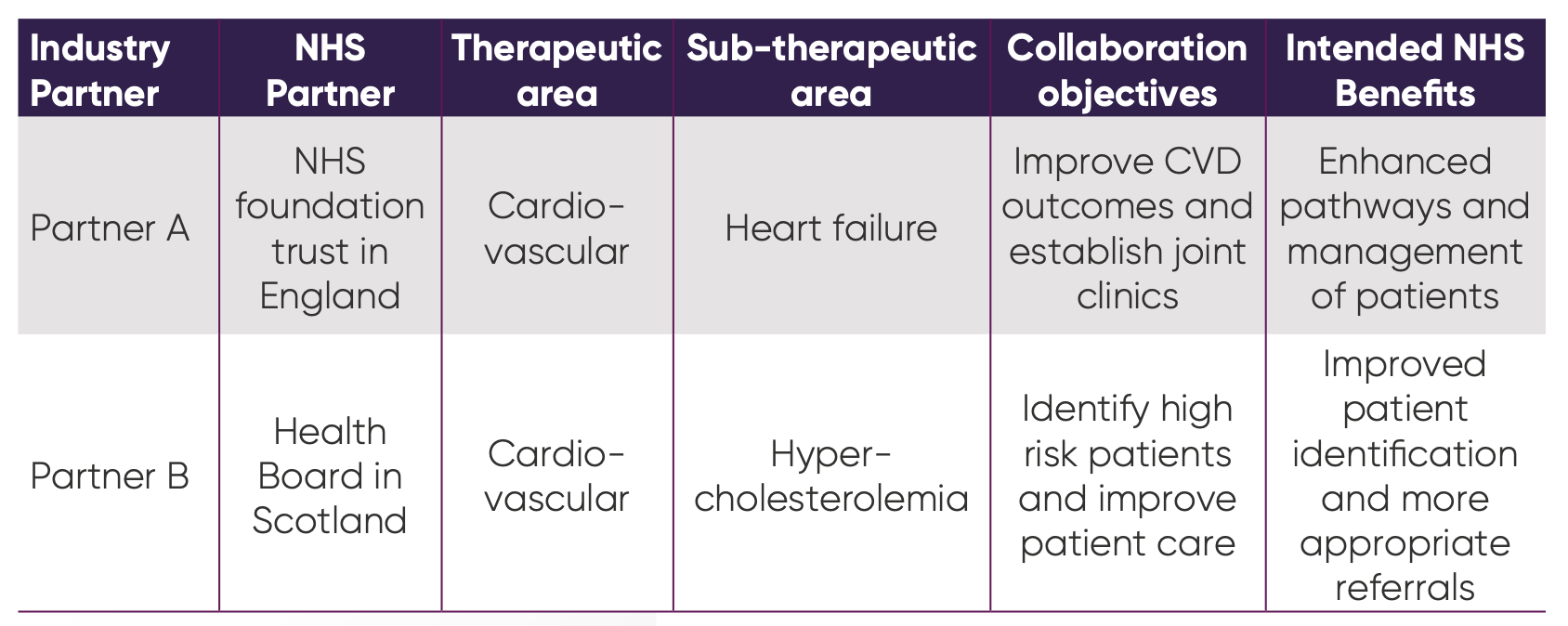
CF pulled out a set of distinguishing features for NHS-Industry partnerships which includes:
- the name of industry partner the name of NHS partner including organisational level
- the therapeutic area
- the partnership objective
- the intended NHS benefits
To quantify the impact, CF compared aggregated data from partnering and non-partnering organisations. Please note that of the 441 identified partnerships, not all were included in every analysis. This was because a number of these projects were excluded due to insufficient numbers in specific therapeutic areas, which precluded meaningful comparative analysis. An example table of records can be viewed below:
The ABPI partnerships dataset in numbers
The data gathering exercise returned 441 collaborations from 30 ABPI members, the majority of which occurred since 2019.
Secondary care partnerships and prescribing
Overarching findings drawn from analysis of innovation scorecard
Partnering trusts in England prescribed closer in line with projected NICE recommendations for eligible patients than trusts that did not partner.
To determine prescribing practices across a range of available treatment groups,4 CF analysed NICE estimate reports and found that neither partnering nor non-partnering trusts exceeded estimated medicine usage among eligible patient populations.5
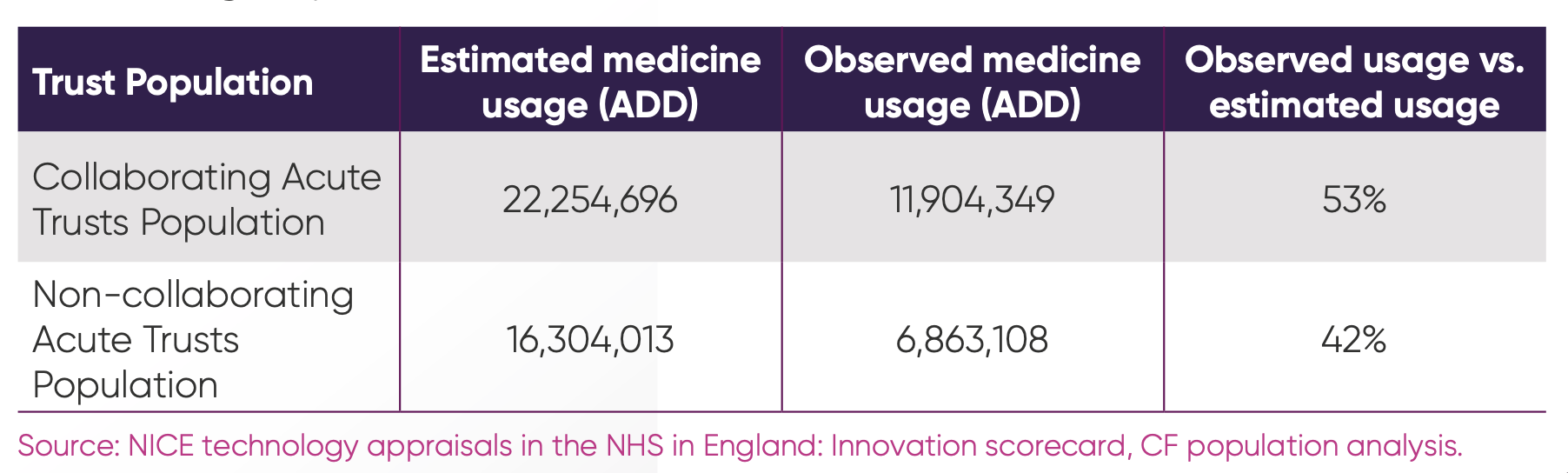
As outlined in the table below, CF’s findings also indicated that trusts that undertook partnerships prescribed closer in line with projected NICE recommendations for eligible patients based on NICE estimate reports (at 53 per cent) compared to trusts that did not (at 42 per cent). (For further details on the methodological approach to this analysis, please refer to Appendix 3).
Having examined the overall estimated prescribing practices among trust populations in secondary care, CF conducted an in-depth analysis of the relationship between the prescribing of specific medicine indicator groups in trusts that engage in partnerships compared to those that do not. This is shown below.
Estimated and observed trust medicine prescribing, partnering acute trusts vs. non-partnering acute trusts.
Assumed daily dose (ADD) from July 2022–June 2023 for select medicine indicator groups). [6]
Trust prescribing by medicine indicator group, partnering trusts vs. non-partnering trusts.
(assumed daily dose per 100,000 finished consultant episode day hospital care in 22/23).
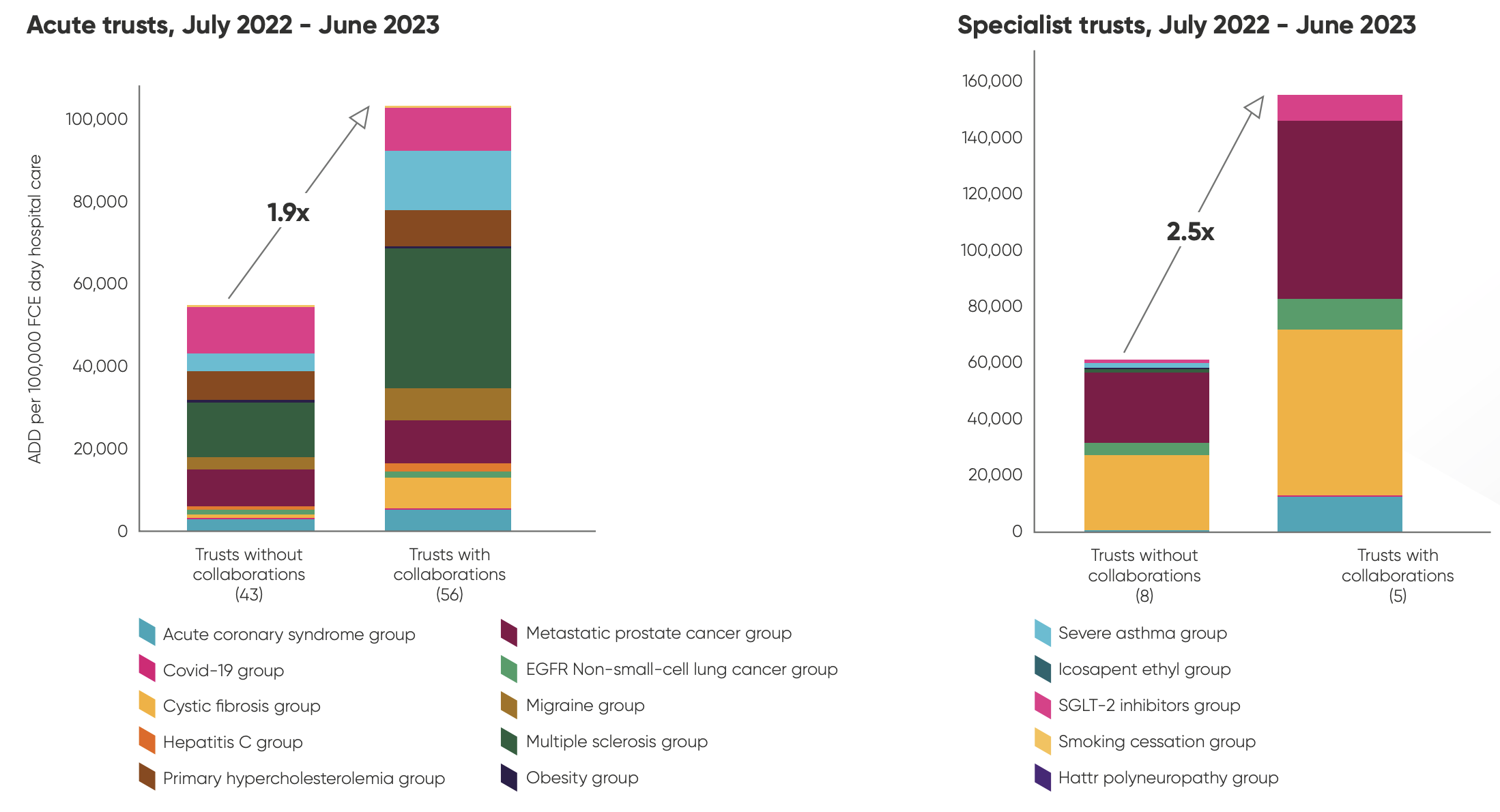
- To further understand the relationship between NHS-industry partnerships in acute and specialist trusts and prescribing practices, CF analysed data from 112 trusts across 15 therapy groups, both partnering and non-partnering.
- While proving a clear causal relationship is challenging, there is a statistically significant trend between partnering trusts and their prescribing practices. As illustrated by the graphs presented, CF’s analysis found that trusts participating in partnerships were more likely to prescribe clinically and cost-effective medicines closer in line with projected NICE recommendations for eligible patients based on NICE estimate reports than those that did not.
- CF’s analysis, based on NICE estimate reports across medicines indicator groups, found that between July 2022 and June 2023, acute and specialist trusts that participated in partnerships were 1.9 and 2.5 times more likely to prescribe closer in line with projected NICE recommendations for eligible patients, compared to those that did not.
Analysis of disease management in partnerships for hypercholesterolemia and type 2 diabetes
CF examined the impact of partnerships on prescribing closer to projected NICE recommendations and the relationship to improved patient outcomes
The previous section illustrated the potential relationship between partnerships and the role they can play in supporting eligible patients to receive the clinically and cost-effective medicines they require. This report will now provide a detailed analysis of two therapy areas: hypercholesterolemia and type 2 diabetes, to determine whether the partnerships in these therapy areas were associated with better health outcomes within the trust’s catchment population (please refer to page 12 for additional information on the rationale behind selecting these two therapy areas for the analysis).
Consequently, 19 projects [7] were identified and evaluated, each with a wide range of objectives as described below:
9 hypercholesterolemia partnerships aiming to…
- improve identification of patients with cardiovascular disease
- optimise medicine use on the lipid management pathway
- increase diagnosis and follow-up of patients
- support implementation of NICE guidelines
10 type 2 diabetes partnerships aiming to…
- improve long-term cardiovascular outcomes and patient experience
- optimise patient pathway and treatment protocol
- support early diagnosis and management and reduce complications
- develop educational programmes and public health initiatives
Partnering acute trusts show a higher likelihood of providing clinically effective treatments for hypercholesterolemia and type 2 diabetes to eligible patients than non-partnering trusts
Acute trust medicine prescription by medicine indicator group, partnering acute trusts vs. trusts that did not partner.
(Assumed Daily Dose per 100,000 Finished Consultant Episode day hospital care in 21/22 and 22/23 for a given medicine indicator group).
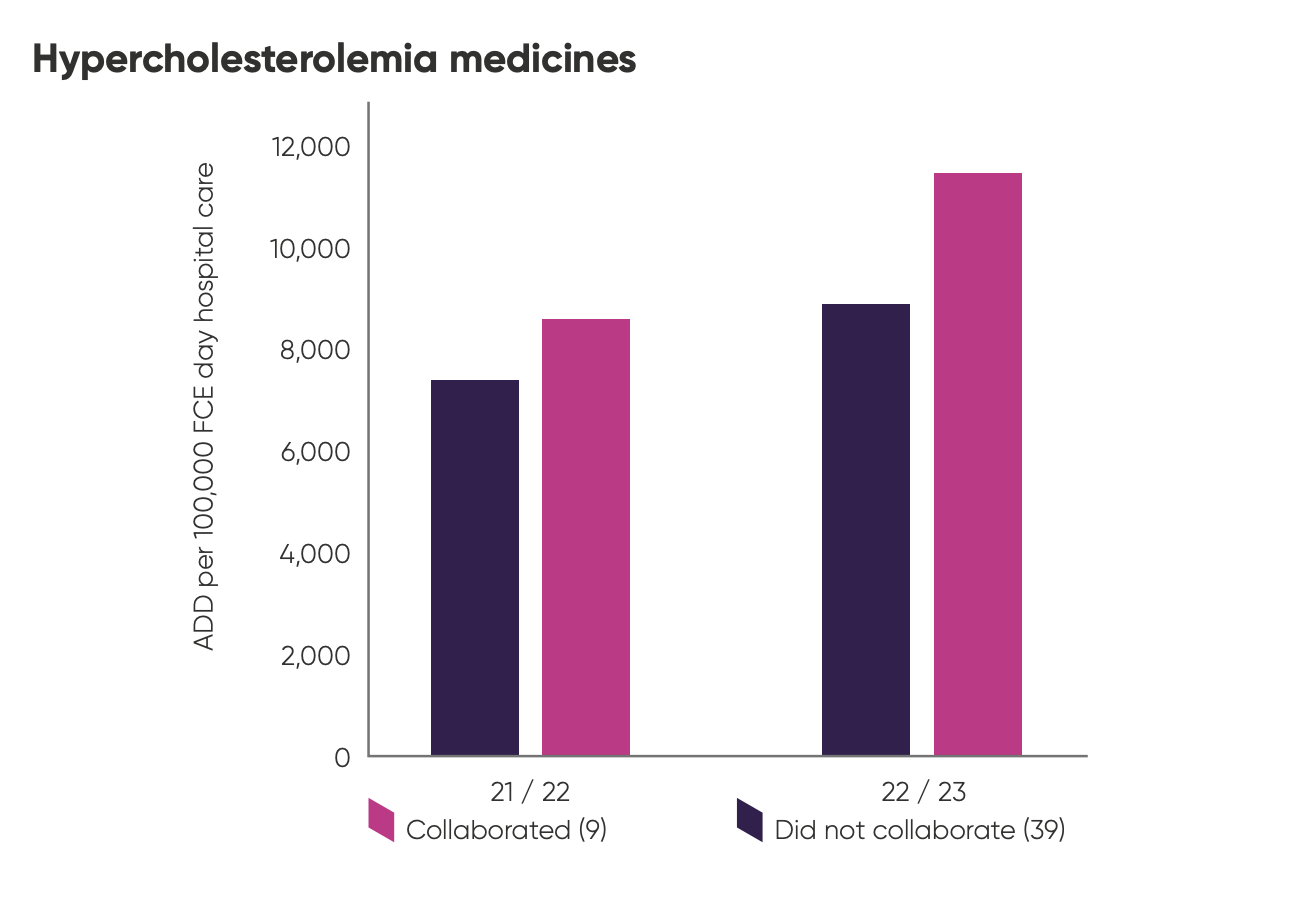
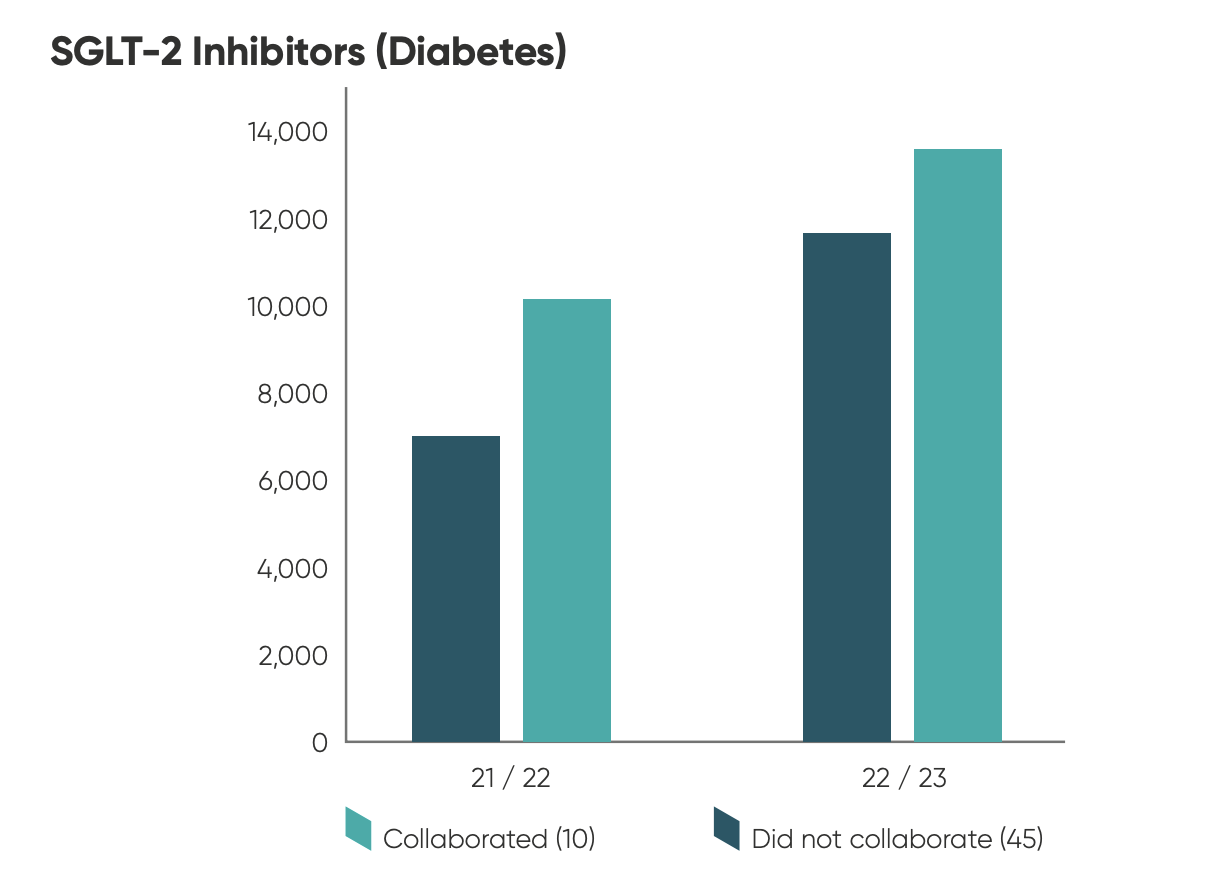
- The results indicate that acute trusts that partnered across two therapeutic areas are potentially more likely to prescribe clinically and cost-effective medicines closer in line with projected NICE recommendations for eligible patients based on NICE estimate reports where data was available, in both 2021/22 and 2022/2023.
- The analysis showed that in partnering trusts, the estimated usage of clinically and cost-effective hypercholesterolemia medicines among eligible populations increased from 12 per cent to 17 per cent between 2021/22 and 2022/23, compared to an increase from 11 per cent to 14 per cent in non-partnering trusts.8
- The next pages explore the potential link between this and health outcomes.
Evidence indicates that partnerships can enhance the relationship between prescribing for eligible patients and result in improved health outcomes
Visual representation of the impact of partnerships on outcomes.
Comparison of prescribing closer in line with projected NICE recommendations for eligible patients, with improvements in health outcomes.
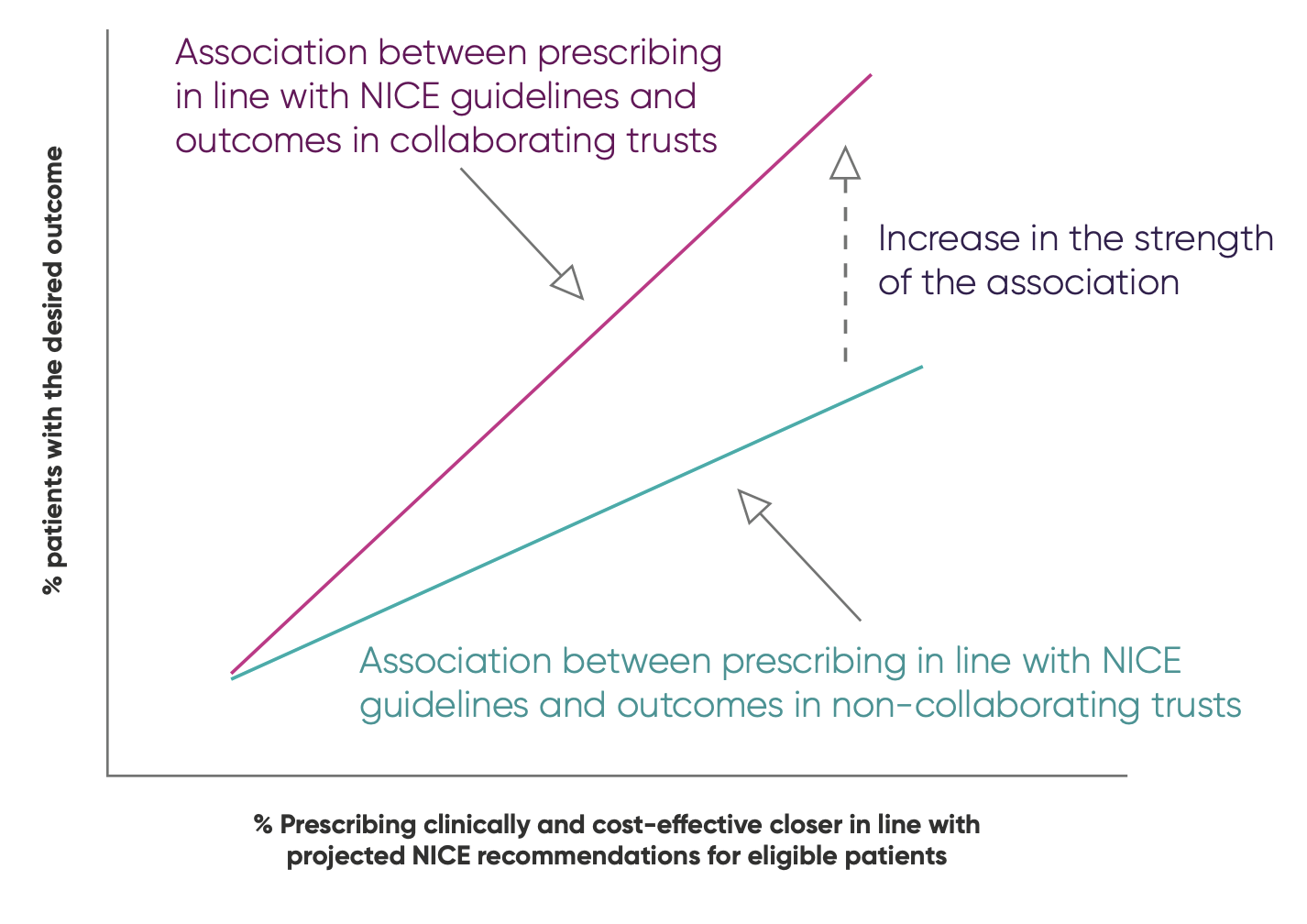
- Having demonstrated the potential relationship between partnerships and prescribing practices, CF investigated the impact this had on health outcomes. [9]
- To achieve this, CF explored the strength of the association between prescribing clinically and cost-effective medicines closer in line with projected NICE recommendations for eligible patients and health outcomes.
- The illustrative graph highlights that partnering trusts were found to have a stronger association between prescribing for eligible patients and health outcomes, highlighting one of the mechanisms by which partnerships can positively impact the NHS.
- This relationship is explored further on pages 24 and 26, where a detailed analysis of the impact of partnerships on improving health outcomes for type 2 diabetes and hypercholesterolemia is provided.
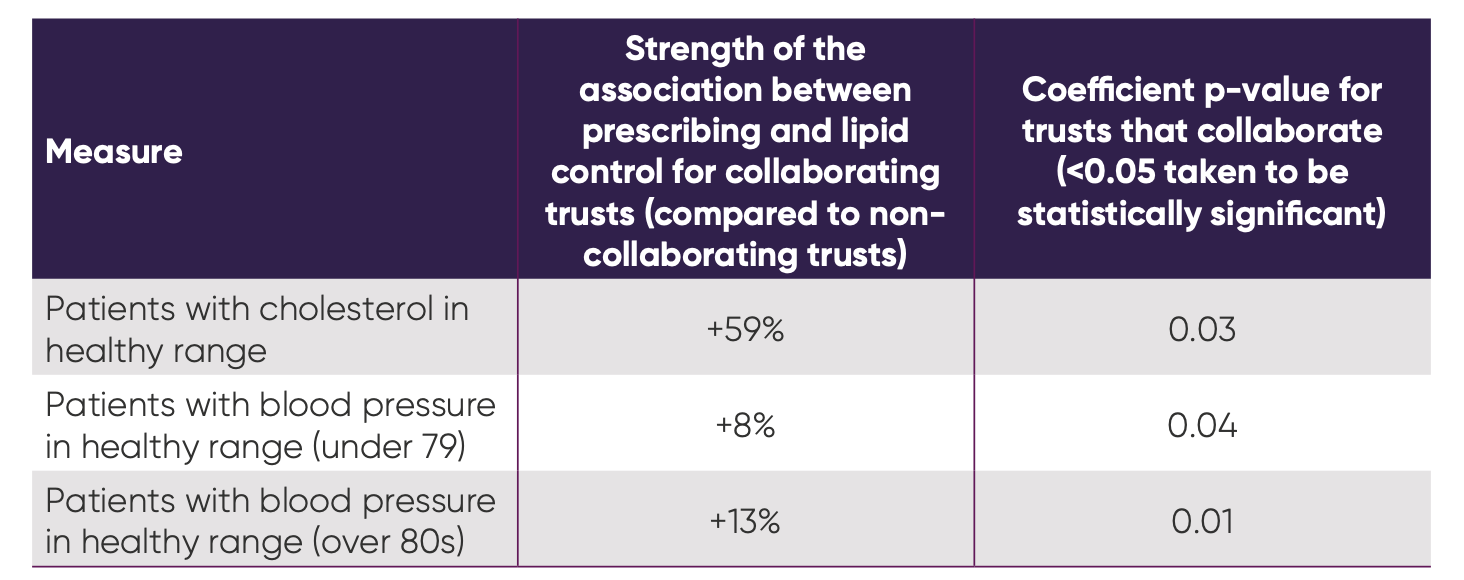
Compared with non-partnering trusts, those partnering with industry show a significantly stronger association (+59 per cent) between prescribing lipid-lowering therapies for hypercholesterolemia and improving cholesterol control
High lipid levels can lead to cardiovascular risks like heart disease or stroke due to artery blockages and lipid-lowering medicines for hypercholesterolemia help reduce these risks. To explore the relationship between partnerships, lipid-lowering therapy prescribing for hypercholesterolemia, and improved lipid control outcomes at the acute trust level, CF analysed data from the Innovation Scorecard and the QOF.
To underpin this analysis, statistical methods (see page 23 for further details) were employed to estimate the relationship between two variables: the change in lipid-lowering therapy prescriptions for hypercholesterolemia over 12 months and the corresponding improvement in cholesterol control among CVD patients within the catchment area. This analysis was conducted across both partnering and non-partnering trusts.
The evaluation found that trusts partnering with industry show a significantly stronger association (+59 per cent) between prescribing lipid-lowering therapies in secondary care for hypercholesterolemia and improving cholesterol control in trust populations. This finding suggests that partnerships in acute trusts leads to prescribing closer in line with projected NICE recommendations for eligible patients based on NICE estimate reports and may improve population outcomes for hypercholesterolemia.
CF also analysed blood pressure control for patients in the catchment areas of acute trusts that partnered and those that did not. Improved blood pressure control also reduces the risks of cardiovascular disease complications, although this is not expected to be reduced by lipid-lowering therapies directly.
Improved blood pressure was more strongly and positively correlated with prescribing practices in partnering trusts, with an 8 percent improvement for those under 79 and a 13 per cent improvement for those over 80, compared to non-partnering trusts.. This improvement suggests that partnerships on lipid-lowering therapies initiated in secondary care could have the knock-on benefit of improving management.
CF’s analysis suggests a relationship may exist between secondary care partnerships in hypercholesteremia and improved management of chronic conditions in primary care
The evidence presented in the previous pages indicates that partnership efforts to prescribe clinically and cost-effective medicines closer in line with NICE recommendations for eligible patients based on NICE estimate reports have the potential to result in a higher proportion of patients achieving better outcomes, such as improved lipid control and diabetes management, alongside enhanced control of blood pressure.
These emerging hypercholesteremia and cardiovascular disease risk observations suggest a potential link between NHS-industry partnerships in secondary care and the long-term management of cardiovascular conditions in primary care.
Further investigation is needed to establish causative factors underlying this relationship. A possible explanation is that partnerships could lead to increased referrals of statin-resistant patients from primary to secondary care, thereby promoting the use of appropriate second-line lipid-lowering treatments. This in turn would reinforce efforts to manage additional cardiovascular risk factors like blood pressure proactively in primary care.
The next page will continue the analysis of the impact partnerships can have on improving health outcomes, with a focus on type 2 diabetes.
About the Association of the British Pharmaceutical Industry (ABPI)
The ABPI exists to make the UK the best place in the world to research, develop and access medicines and vaccines to improve patient care. We represent companies of all sizes which invest in making and discovering medicines and vaccines to enhance and save the lives of millions of people around the world. In England, Scotland, Wales and Northern Ireland, we work in partnership with governments and the NHS so that patients can get new treatments faster and the NHS can plan how much it spends on medicines. Every day, our members partner with healthcare professionals, academics and patient organisations to find new solutions to unmet health needs. www.abpi.org.uk
About CF
We are a leading consultancy dedicated to making an enduring impact on health and healthcare. We work with leaders and frontline teams to improve health, transform healthcare, embed life science innovation and boost growth through investment. With unmatched access to UK healthcare data and award-winning data science expertise, our team are a driving force for delivering positive and meaningful change. https://www.carnallfarrar.com/
To find out more about this report, or any of our work at CF, contact us today.