The Chancellor delivered Budget 2026 on 28 October 2026 against a difficult backdrop. The conflict in the Middle East has pushed up energy prices, and CPI inflation rose to 3.5% in the 12 months to September 2026, from 3.1% in August 2026. The Office for Budget Responsibility now expects the UK to pay around £14 billion a year more in debt interest than it forecast in the spring. The Treasury chose to absorb that cost from its fiscal headroom rather than raise broad-based taxes.

For health, that leaves little room. The Budget confirms the NHS settlement agreed at the 2025 Spending Review and adds £190 million for the NHS in England for winter 2026/27, less than 0.1% of the Department of Health and Social Care’s budget. The Treasury is also clear that not every department should expect a real-terms increase at the 2027 Spending Review.

The key points

See our snapshot for a full breakdown (click to enlarge):
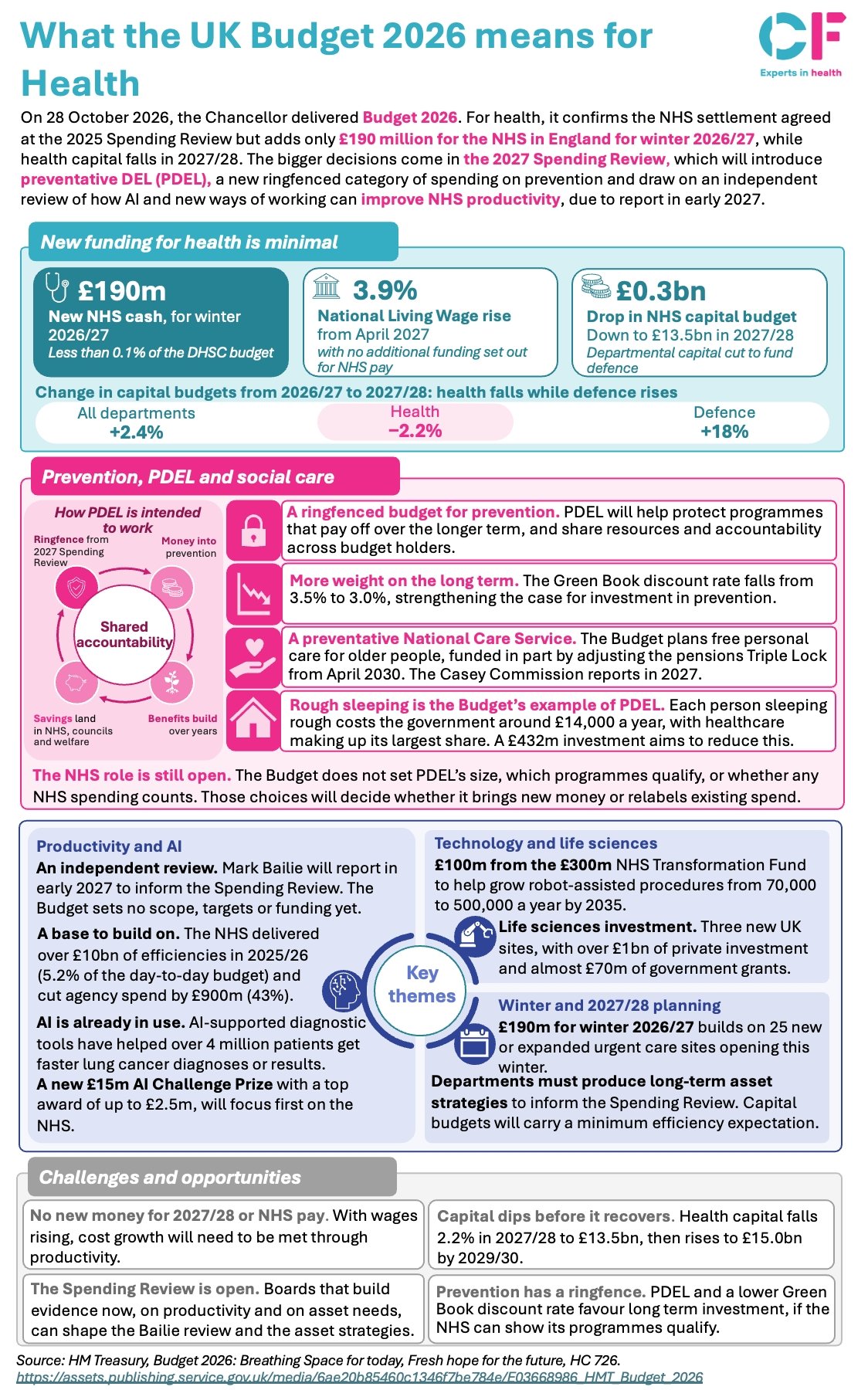
Budget 2026 holds the line on NHS funding rather than moving it. The real decisions for health have been pushed to the 2027 Spending Review, and the work NHS leaders do over the next six months will shape what they get from it.

To read the full UK Budget report, click here.
FAQ’S: Behind the report

Budget 2026, delivered on 28 October 2026, confirms the NHS settlement agreed at the 2025 Spending Review. It adds £190 million for the NHS in England for winter 2026/27, less than 0.1% of the DHSC budget. The larger funding decisions have moved to the 2027 Spending Review.

No additional funding for NHS pay is set out. The National Living Wage rises 3.9% from April 2027. Our view is that cost growth in 2027/28 will need to be met largely through productivity gains.

Preventative departmental expenditure limits (PDEL) are a new ringfenced category of government spending, to be introduced at the 2027 Spending Review. It will protect programmes that take years to deliver their benefits, and share resources and accountability across budget holders. Their size, and whether any NHS spending counts towards them, are not yet set.

The Chancellor and the Health and Social Care Secretary have asked Mark Bailie to lead an independent review of NHS productivity and the opportunities from AI and technology. It reports in early 2027 and will inform the 2027 Spending Review.

Health capital falls 2.2% in 2027/28, to £13.5 billion, after a further 1% cut to departmental capital budgets to help fund the Defence Investment Plan. Departments must also produce long-term asset strategies to inform the 2027 Spending Review.

The government plans a National Care Service in England, with personal care free at the point of use, funded in part by adjusting the Triple Lock from the next Parliament. Baroness Casey’s Independent Commission on Adult Social Care will report in 2027.

To speak to one of our specialists about our Health Systems services, contact us today.