ADHD referrals in England have grown rapidly since 2020, overwhelming NHS assessment capacity.
More than 560,000 people are currently on ADHD waiting lists in England.
London faces significant unmet need, with only a minority of the estimated ADHD population receiving treatment.
Diagnostic pathways remain constrained by specialist capacity and siloed services.
A new model of care is needed, combining community-based support, better triage, workforce redesign and stronger data.
In part 1 of this series, we categorised the rapid rise in awareness of ADHD [1]. Several factors have contributed: the disruption of the Covid-19 pandemic, which led many adults to recognise symptoms of inattention and impulsivity in themselves for the first time; the pervasive influence of social media in normalising conversations about neurodivergence; the particular role of TikTok in raising awareness among adolescents [2]; and the well-documented cascade within families once one member receives a diagnosis, reflecting the condition’s strong genetic basis [3].
This has led to an explosive growth in referrals, which has had an immediate knock-on in the UK of rapidly expanding waiting lists, as demand for new diagnosis has vastly outstripped the supply of assessments in the NHS.
Two national reports have now placed ADHD at the centre of UK health policy. The Independent ADHD Taskforce estimated the avoidable cost of unsupported ADHD at a minimum of £17 billion nationally and recommended a fundamental shift to holistic, stepped, generalist models of care in the community. In December 2025, the government launched a formal review into mental health, ADHD and autism services, backed by £688 million in new funding and a commitment to 8,500 additional mental health workers. These reports confirm what service data has been signalling for years: NHS capacity has been comprehensively overwhelmed, the gap between estimated prevalence and treatment is amongst the largest in Europe, and the political window for change is now open.
ADHD services in London face rapidly growing level of unmet need, historic under-commissioning and consequent difficulties accessing services on the NHS. The surge in demand has also posed significant questions about what should be covered by the NHS, as private providers have offered services initially funded without restriction, before recent changes were introduced to cap that activity and impose price caps [4].
An alarming trajectory
The first dedicated national ADHD data publications launched in May 2025. As of December 2025, England-wide open referrals stand at approximately 562,000 [5]. Of those, 61.6% of adults and 65.8% of children have been waiting for more than a year. Only around 10% are seen within 13 weeks. The quarterly trajectory, from roughly 365,000 in December 2024 to 562,000 by December 2025, reflects both genuine demand growth and expanding provider coverage, but the direction is unmistakable.
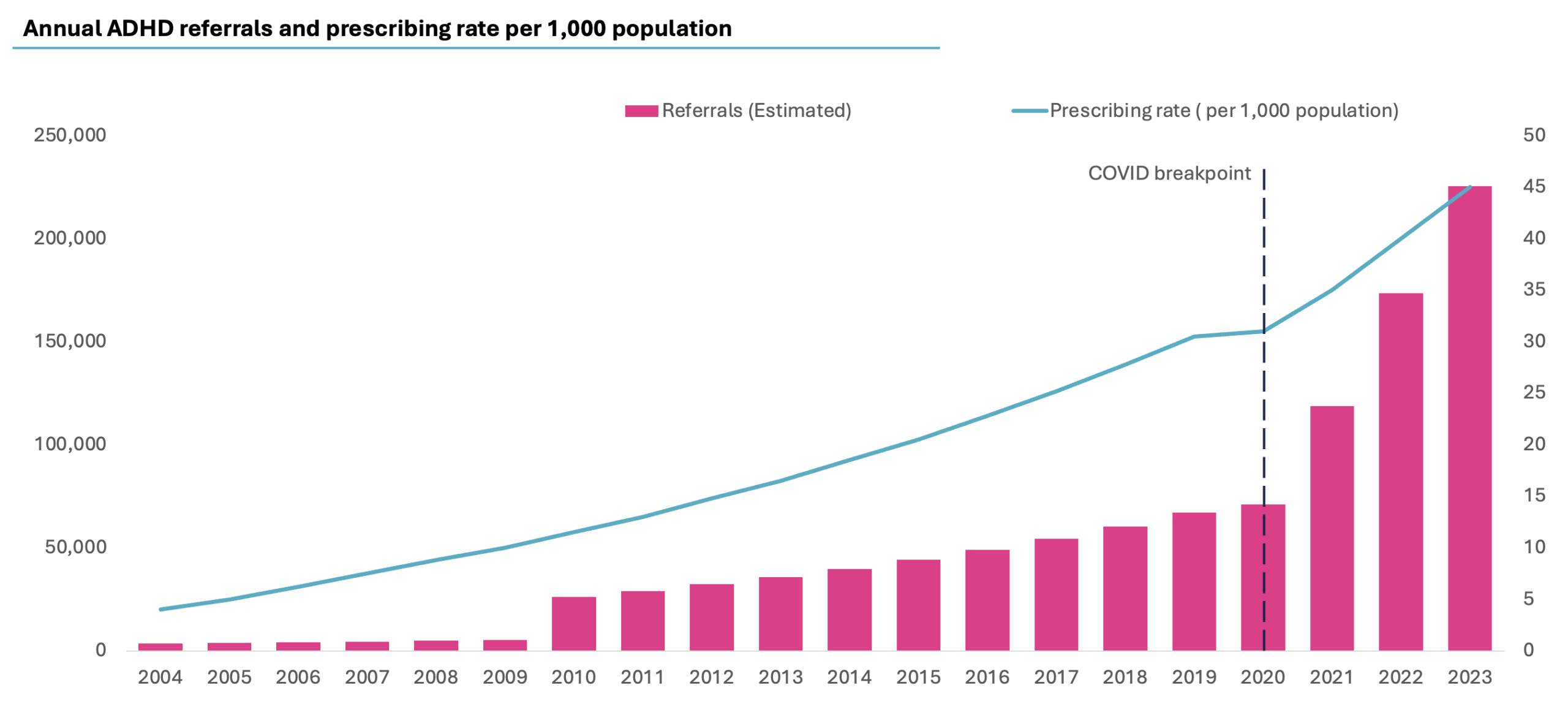
Exhibit 1. Annual ADHD referrals and prescribing rate per 1,000 population, 2004–2025. Source: CF analysis of 2004–2009: referral figures estimated from CPRD new diagnosis incidence (Holden et al. 2013). 2010–2019: prescribing proxy (NHSBSA; Hasan et al. 2022), anchored to 2020 service-level data. 2020–2023: BJPsych Bulletin (2025). 2024–2025: MHSDS MI (NHS England 2025), approximately 19–20k new referrals per month annualised. No continuous national referral series exists. Prescribing rate: McKinchie et al. 2023; NHSBSA; Lancet Regional Health Europe 2026. Medication figures converted from prescribing items to estimated individuals assuming approximately 13 items per person per year (based on standard 28-day supply intervals). Actual figures may vary due to treatment breaks, dose changes, or partial-year prescribing. This conversion should be treated as indicative only.
Three distinct phases are visible in the data:
- 2010–2019: slow accumulation. Referrals growing at around 11% annually but throughput broadly keeping pace. The waiting list existed but was measured in thousands, not hundreds of thousands.
- 2020–2023: the break. Demand tripled in under three years while capacity barely moved. The waiting list went from roughly 7,500 to an estimated 200,000 or more in the MHSDS-visible portion, before the national MI system even existed to count it properly.
- 2025: the revealed iceberg. The launch of the MHSDS MI in May 2025 did not create the waiting list; it made it visible for the first time. The figures from 365,000 at first publication to over 560,000 by December 2025 represent the first properly anchored numbers in 20 years of rising pressure.
Notably, the adult waiting list has seen the sharpest rise, increasing 86% in one year [6]. The proportion of people waiting is significant compared to estimated prevalence; the waiting list alone represents over 22% of the total estimated ADHD population in England.
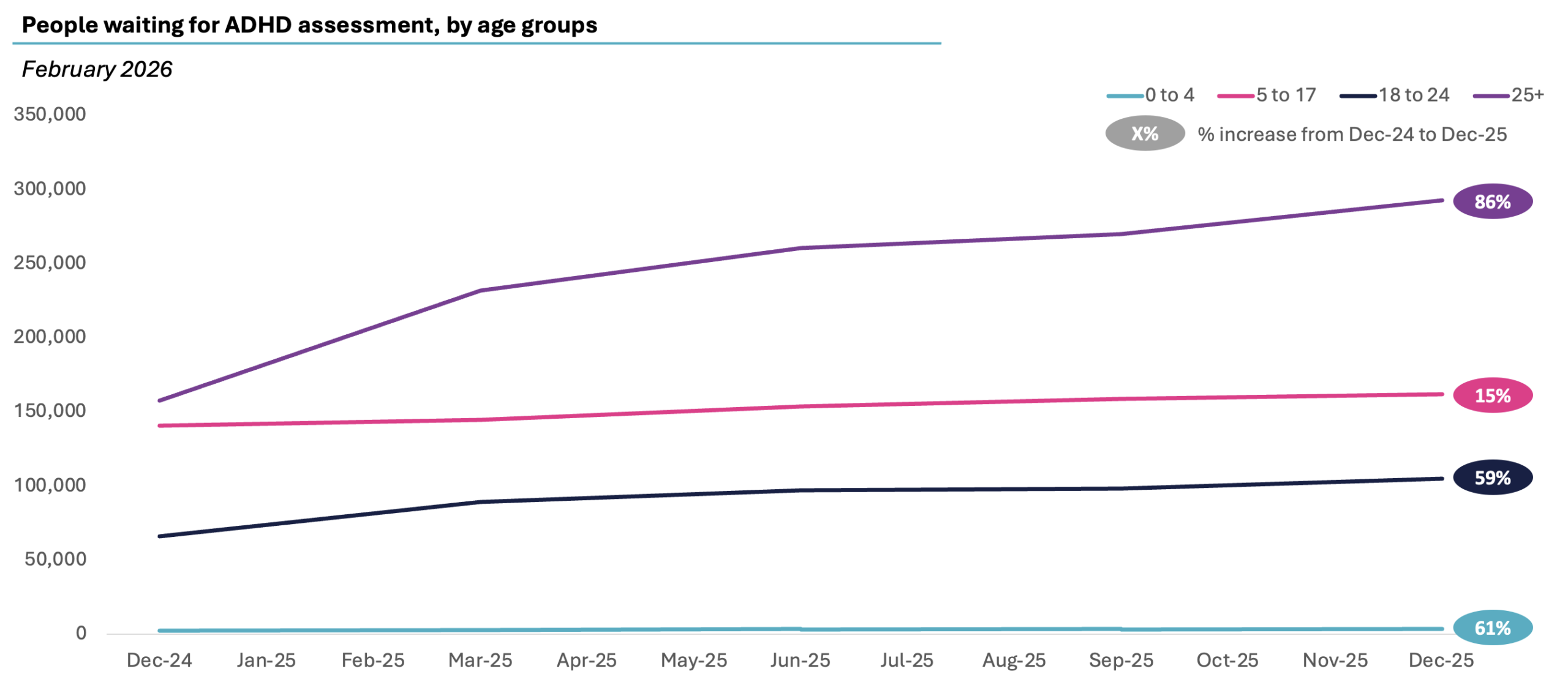
Exhibit 2. Number of people waiting for ADHD assessment, by age group. Source: CF analysis of ADHD Management Information, Mental Health Services Dataset (MHSDS), NHS England Digital. February 2026.
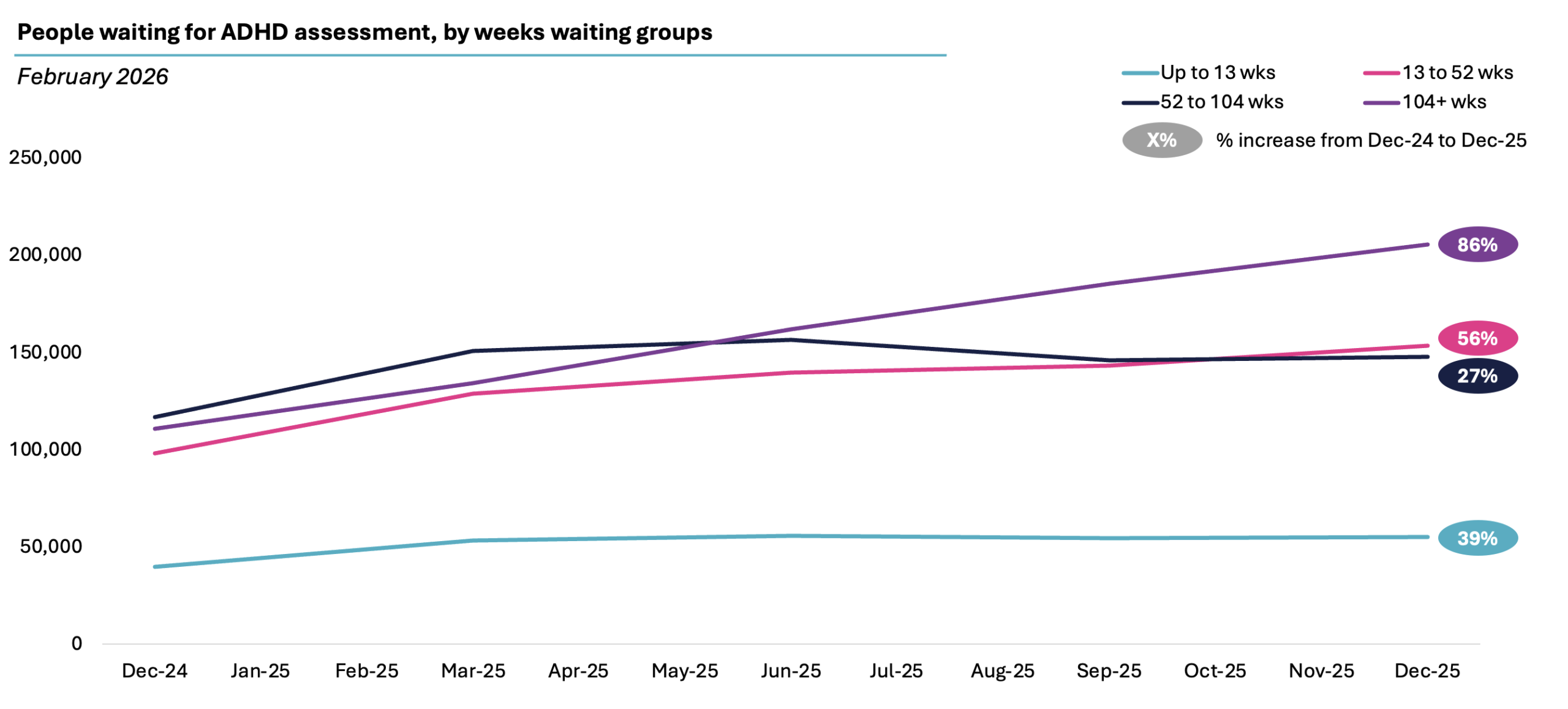
Exhibit 3. Number of people waiting for ADHD assessment, grouped by weeks waiting. Source: CF analysis of ADHD Management Information, Mental Health Services Dataset (MHSDS), NHS England Digital. February 2026.
Exhibit 4. National monthly ADHD assessment referrals and removals. Source: CF analysis of ADHD Management Information, Mental Health Services Dataset (MHSDS), NHS England Digital. February 2026.
Data note: NHSE advises against comparing waiting list figures over time, as the publications remain classified as Management Information, with Official Statistics status targeted for 2026/27. Each quarterly release includes new submitters, and there is no mandated reporting standard. Right to Choose and private providers are largely excluded, and different data sources cannot yet be de-duplicated, meaning some double counting is likely.
The London story
London has an ADHD crisis hiding in plain sight. NICE estimates that 3.5% of the UK adult population has ADHD [7], yet across London’s five Integrated Care Systems, just 16% of the estimated prevalent population is receiving treatment: roughly 33,800 people out of more than 207,000 [8]. Direct ADHD care accounts for only 2% of mental health budgets [9]. Mental health spending itself represents approximately 9% of total NHS expenditure [10], meaning that ADHD services receive roughly 0.18% of the total NHS budget, for a condition estimated to affect 4.4% of the population. The gap is not evenly distributed. Across London’s five Integrated Care Systems, it is estimated that between 11% and 20% of the population likely to benefit from treatment are currently receiving it, with significant variation by borough and ICS [11].
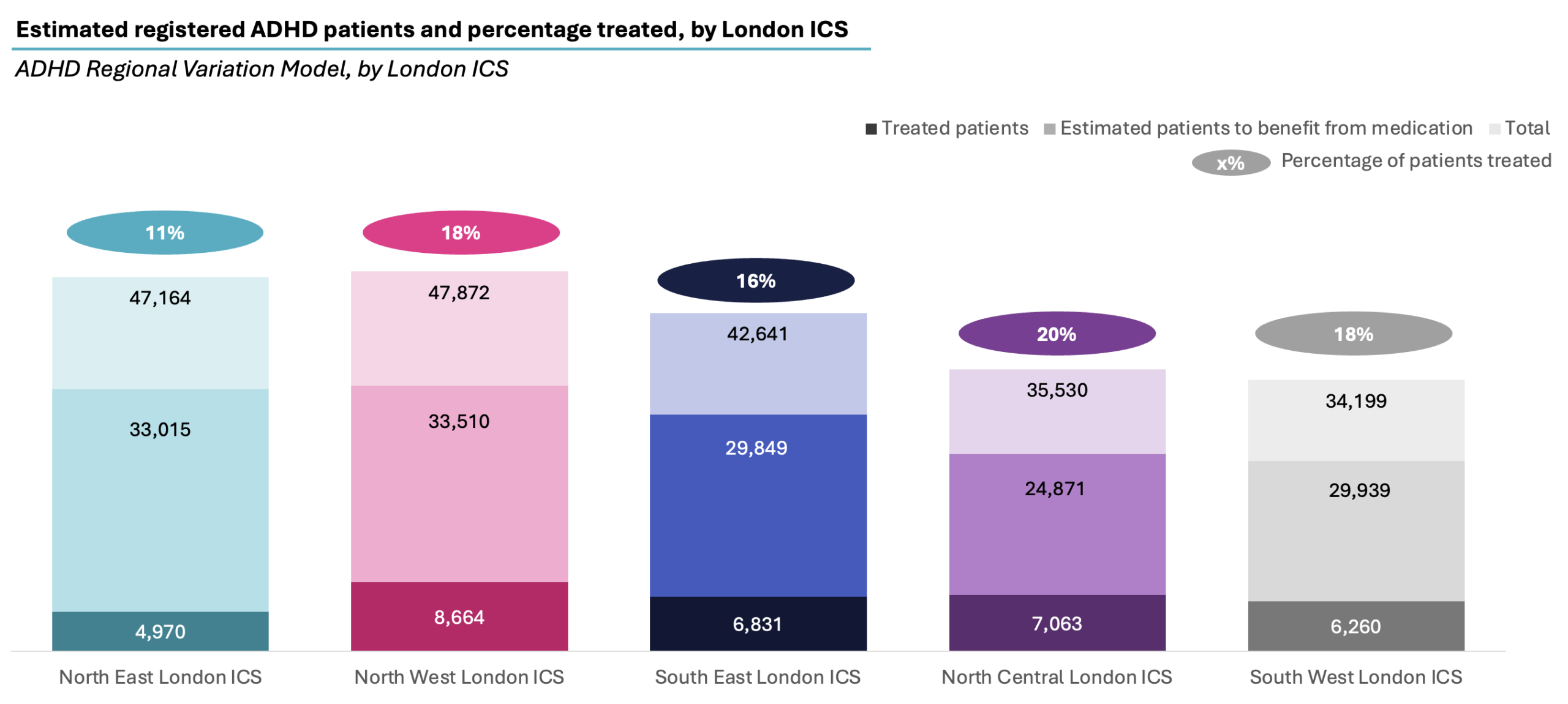
Exhibit 5. ADHD healthcare resource utilisation in England. Source: CF analysis. Supporting Transformation of ADHD Services in London.
The contrast between low diagnosis rates and growing public awareness has created a pressure wave now hitting services from every direction. More than 560,000 people are currently on ADHD waiting lists in England, with over 60% waiting more than a year [12]. New referrals are running at approximately 20,000 per month, having risen 400% since 2020. Prescriptions are up 118% over the same period [13]. Only around 10% of those waiting are seen within 13 weeks, and in some boroughs the wait stretches to years.
The challenge of diagnosis
ADHD is a condition that is frequently misunderstood and commonly co-presents with other mental health and neurodevelopmental conditions. Hospital Episode Statistics (HES) data shows that emotionally unstable personality disorder and Asperger’s syndrome are the most common conditions seen alongside ADHD, both as secondary and primary diagnoses [14]. All of the most common co-presenting conditions are mental or neurodevelopmental in nature, which underscores the case for a diagnostic mechanism that identifies concurrent conditions while assessing for ADHD.
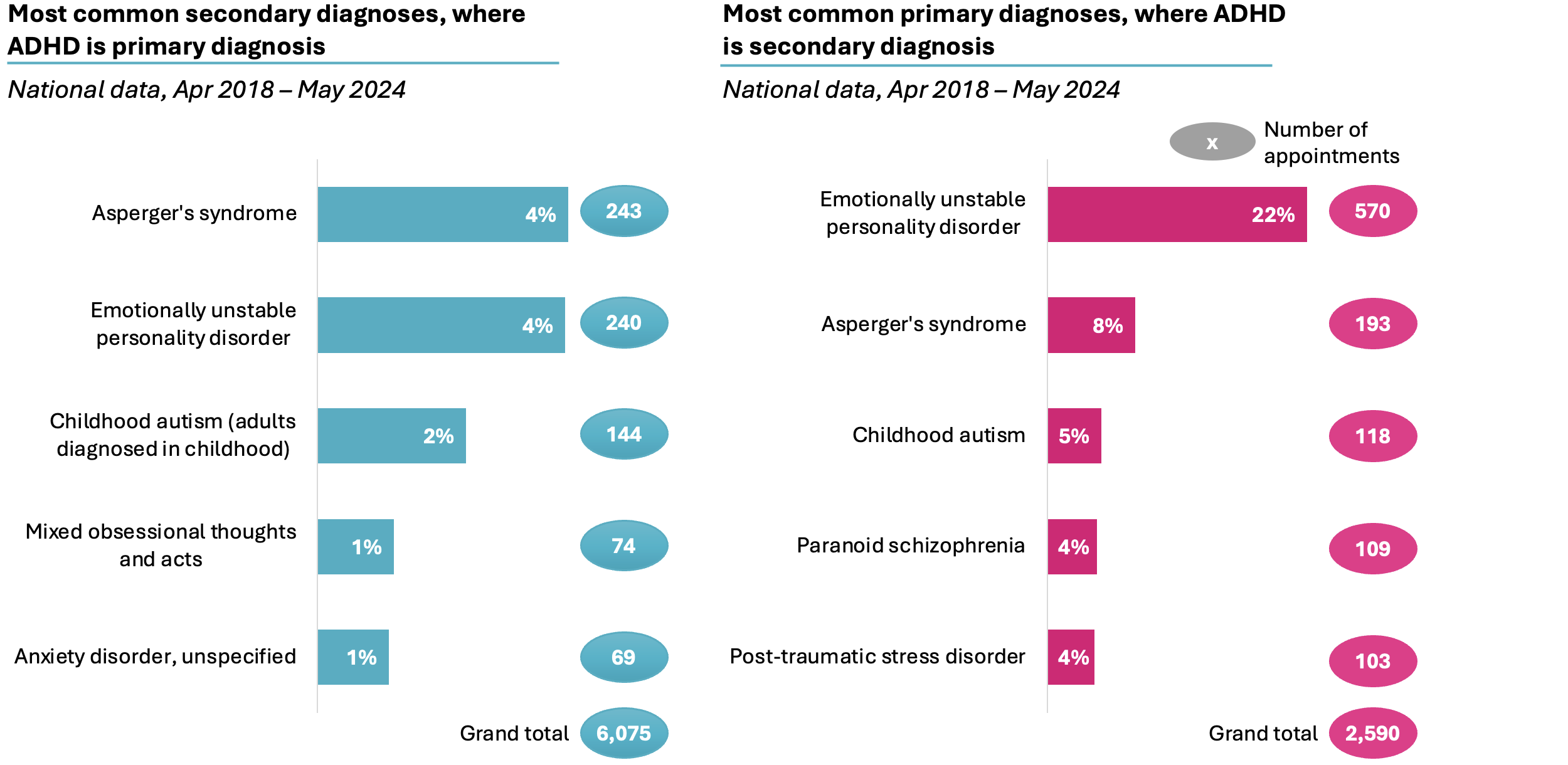
Exhibit 6. Most common comorbidities when ADHD is the primary or secondary diagnosis. Source: CF analysis of HES data ADHD comorbidities. Data on file. Supporting Transformation of ADHD Services in London.
ADHD frequently co-occurs with other types of neurodivergence, including autism, and with common mental health conditions such as anxiety, depression and bipolar disorder [15]. However, ADHD, autism and other neurodevelopmental services in England are often separated and siloed by diagnosis type and by age, leading to care that is neither evidence-based nor person-centred [16].
The current model also depends on specialist psychiatrist assessment at the diagnostic stage, which artificially constrains capacity. NICE guidance recommends assessment by a “mental health specialist trained in diagnosing and treating ADHD” but does not mandate that this be a consultant psychiatrist. The practical interpretation of this guidance by many services has been a significant contributor to the assessment bottleneck.
What’s happened
The arithmetic here is straightforward but worth stating plainly. Between 2020 and 2023, referrals to ADHD services grew by 400%. NHS assessment capacity did not keep pace: the number of psychiatrist-led assessment slots in 2023 was not materially different from 2019, with services chronically under-commissioned and lacking direct dedicated funding through the mental health investment standard. Pressure on 90% of clinical capacity from follow-up and annual review obligations left little room for new assessments. The predictable consequence was a waiting list that grew from an estimated 7,500 to more than 170,000 across the 39 trusts providing data by December 2023, with London’s backlog alone projected to approach 200,000 by 2026 at the prevailing growth trajectory. By 2025, when the national MHSDS management information system made these figures visible for the first time, the England-wide open referral count stood at approximately 562,000. The services that were meant to assess people were simultaneously overwhelmed at the point of entry and committed at the point of exit: titration, medication reviews, and annual recalls were consuming the clinical bandwidth that would otherwise have been available for new assessments, with some services reporting that follow-up activity occupied up to 90% of clinical capacity.
The Right to Choose and growth of private provision
The result has been a massive growth in private sector provision. Under the NHS “Right to Choose” framework, patients who are referred by their GP can select an alternative qualified provider, including a private company, and the local Integrated Care Board is required to pay for that care. Critically, the private provider does not need a direct contract with the patient’s local ICB; a single contract with any ICB in England permits them to treat patients anywhere in the country and invoice accordingly [17].
This mechanism, combined with the scale of unmet demand, has driven an estimated 255% increase in NHS expenditure on private ADHD providers between 2022/23 and 2024/25. Data from 19 ICBs shows spending rising from £16 million to £58 million; extrapolated across all 42 ICBs at that point in time, the figure reaches an estimated £128 million [18].
The local NHS has in effect lost control of this area of budgeting and planning, as referrals flow to private providers without prior authorisation. With demand showing no signs of slowing, the only sustainable response is a fundamentally different model of care.
The financial consequence was predictable. FOI data from 19 ICBs shows NHS expenditure on private ADHD providers rising from £16 million in 2022/23 to £58 million in 2024/25, a 255% increase in two years. Extrapolated across all 42 ICBs, the figure reaches an estimated £128 million. In London, CF analysis of the five ICS areas shows that direct ADHD care accounted for just 2% of mental health budgets in 2024, against a condition estimated to affect 4.4% of the population. In response, NHS England introduced a national price cap for Right to Choose ADHD assessments in 2024/25, setting a ceiling of approximately £400 per assessment. The cap reduced the unit cost of each referral but did not address the volume: new referrals were running at approximately 20,000 per month nationally by the end of 2025, meaning the overall spend trajectory continued upward even as the tariff per case fell. A further consequence of the cap was a reduction in the number of providers willing to operate at the capped rate, narrowing the effective private market and, in some areas, extending waits in the private sector as well as the NHS. The activity gap this created, between the volume of patients referred under Right to Choose and the capacity of capped providers to absorb them, remains unresolved and represents a structural risk to ICB budgets in 2025/26 and beyond.
In Part 3, we examine the human and financial cost of ADHD, and the future opportunities for addressing this.
FAQ’s
References:
- Google Trends data, CF analysis. Data on file.
- Yeung, A. et al. (2022). TikTok and ADHD: A Cross-Sectional Study of Social Media Content Quality. Canadian Journal of Psychiatry, 67(12).
- Faraone, S.V. et al. (2021). The World Federation of ADHD International Consensus Statement: 208 evidence-based conclusions about the disorder. Neuroscience & Biobehavioral Reviews, 128, pp.789–818.
- Centre for Health and the Public Interest (2025). Market Failure: How the under-regulated market in NHS funded ADHD services impacts patients and the finances of the NHS.
- Report of the Independent ADHD Taskforce: Part 1 (2025). Commissioned by NHS England.
- NHS England Digital, ADHD Management Information, MHSDS. February 2026 publication. Table 2a: adults aged 25+ waiting rose from 157,390 (Dec 2024) to 292,425 (Dec 2025).
- NICE (2023). Attention Deficit Hyperactivity Disorder: Diagnosis and Management. Available at: https://cks.nice.org.uk/topics/attention-deficit-hyperactivity-disorder/background-information/prevalence/
- Takeda ADHD Regional Variation Model data for London ICSs (NWL, NEL, SEL, NCL, SWL).
- NHS ADHD spend versus total NHS spend, CF Analysis. Data on file.
- Gilburt, H. and Mallorie, S. (2024). Mental Health 360: Funding and Costs. The King’s Fund.
- Takeda ADHD Regional Variation Model data for London ICSs (NWL, NEL, SEL, NCL, SWL). Treatment rates: NEL 11%, SEL 16%, SWL 18%, NCL 20%, NWL 18%.
- NHS England Digital, ADHD Management Information, MHSDS. February 2026 publication. Table 2a.
- NHS Business Services Authority (2024). Medicines Used in Mental Health England 2023/24. CF Analysis. Data on file.
- Katzman, M.A. et al. (2017). Adult ADHD and comorbid disorders: clinical implications of a dimensional approach. BMC Psychiatry, 17, 302; HES data ADHD comorbidities primary or secondary diagnosis, CF Analysis. Data on file.
- Faraone, S.V. et al. (2021). The World Federation of ADHD International Consensus Statement. Neuroscience & Biobehavioral Reviews, 128, pp.789–818.
- Report of the Independent ADHD Taskforce: Part 1 (2025). See recommendation 7 on diagnostic silos.
- Centre for Health and the Public Interest (2025). Market Failure: How the under-regulated market in NHS funded ADHD services impacts patients and the finances of the NHS. See Sections 1–2.
- Centre for Health and the Public Interest (2025). Market Failure. Table 1: Growth in expenditure on private companies providing ADHD assessments and treatment, based on FOI returns from 19 ICBs.
About CF
CF is a leading consultancy dedicated to making an enduring impact on health and healthcare. We work with leaders and frontline teams to improve health, transform healthcare, embed life science innovation and boost growth through investment. With unmatched access to UK healthcare data and award-winning data science expertise, our team are a driving force for delivering positive and meaningful change.
About the authors

Ellen Teesdale
Ellen is the Business Development Manager for Health Investing, working to expand CF’s work and expertise into the private sector. She founded and led the firm’s healthcare practice, managing a diverse range of clients to facilitate the successful integration of innovation into healthcare systems, such as cancer therapeutics and novel biopharmaceuticals.

Frederick Bennett
Freddie is a Consultant at CF, bringing over 8 years of NHS experience spanning clinical practice as a Physiotherapist and operational management. Throughout his career, he has led and worked within teams focused on cost improvement programmes and service efficiencies. His work spans acute collaboration and group model development, large-scale value and efficiency programmes, and national digital infrastructure rollout.

Ben Richardson
Ben Richardson is a Managing Partner at CF, leading Life Sciences and Data Innovation. With two decades of experience, he has worked with health systems and life sciences companies globally, focusing on strategy, transformation, and development. Ben has contributed to primary care, diabetes, cardiovascular, cancer, mental health, and population health management. Since 2014, he has helped CF become an award-winning healthcare company in management consulting and data services.

Vernon Baxter
Vernon is an Associate Partner at CF, connecting leaders in private equity, healthcare and banking with the team at CF. Vernon brings extensive market intelligence to the team, who advise clients on commercial and operational due diligence, value creation and growth strategy.