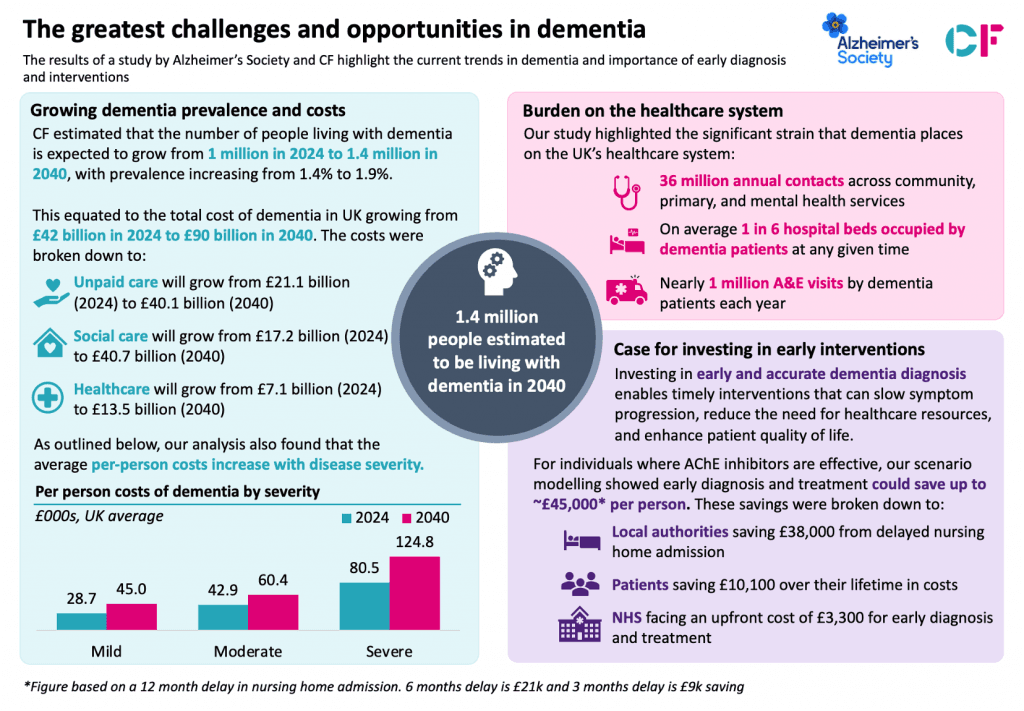
Dementia is one of the UK’s most pressing health and social care challenges, with profound impacts on individuals, families, healthcare systems, and the economy. With nearly one million people in the UK living with dementia, more needs to be done to ensure its impact on those affected, the healthcare system and the economy is realised and prioritised.
In support of World Alzheimer’s month, CF has summarised its recent work with Alzheimer’s Society to understand dementia’s growing impact and the critical importance of early diagnosis and intervention. CF applied a unique data-led, real-world evidence approach to deliver three reports on the impact of dementia:
- Annual cost of dementia (see summary report here)
- Dementia’s contribution to health metrics (see report here)
- Impact of early diagnosis and treatment (see report here)
The headline figures are sobering and present significant structural and financial challenges to the UK.
Please contact us today to find out more about this research and our work in data, digital and RWE.
*Discover-NOW database. (Accessed 2024). https://discover-now.co.uk
Executive summary
Conducted by CF for the Alzheimer’s Society, this study offers new insights into the economic burden of dementia, estimating costs across various categories and investigating healthcare utilisation by dementia patients. Leveraging a unique data-led approach with data from the North West London DiscoverNOW secure data environment, the study analysed healthcare records of 26,097 dementia patients, revealing per person healthcare costs and broader dementia-related expenses.
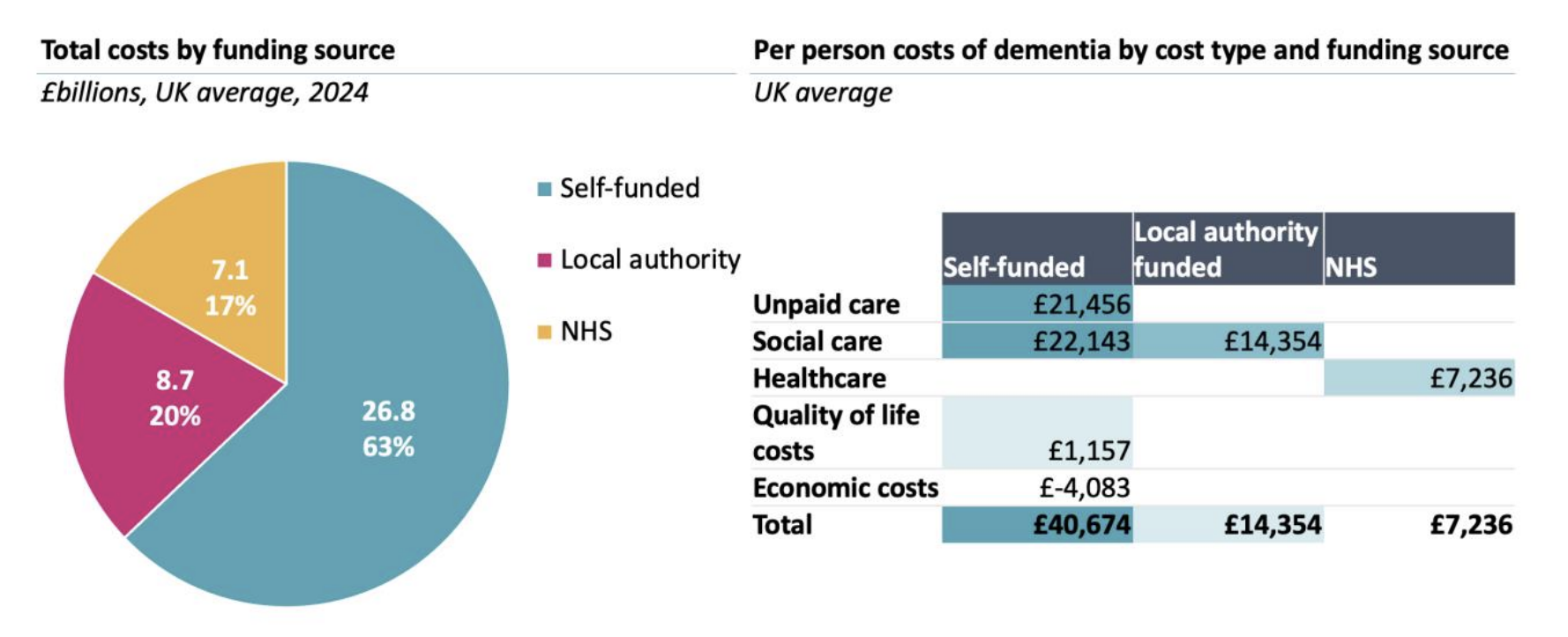
The forecasted cost of dementia is expected to rise from £42billion in 2024 to £90billion by 2040, attributed to the projected rise in dementia prevalence and the increasing expenses of services. Currently, there are approximately 982,000 individuals living with dementia in the UK, a figure projected to increase to 1.4 million by 2040. This increase in prevalence and cost is driven by factors such as population growth, an aging population, and anticipated rises in unit prices for care, particularly in social care. Of the £42billion spent on dementia in 2024, the study has found that 63% of total costs are borne by patients and their families, a statistic that requires attention given that 41% of people reporting that this has caused them financial difficulties .
The average per-person costs associated with the stages of dementia severity vary significantly, estimated at £28,700 for mild dementia, £42,900 for moderate dementia, and £80,500 for severe dementia. Unpaid care represents the largest expense, constituting 50% of total costs in 2024, underscoring the critical role of unpaid carers in supporting individuals with dementia. These carers often dedicate substantial time to looking after patients with dementia, with a third spending over 100 hours per week on caregiving duties1. Social care costs, the second-largest cost category, is highly dependent on dementia severity, with the average per-person cost nearly tripling for severe cases compared to mild ones.
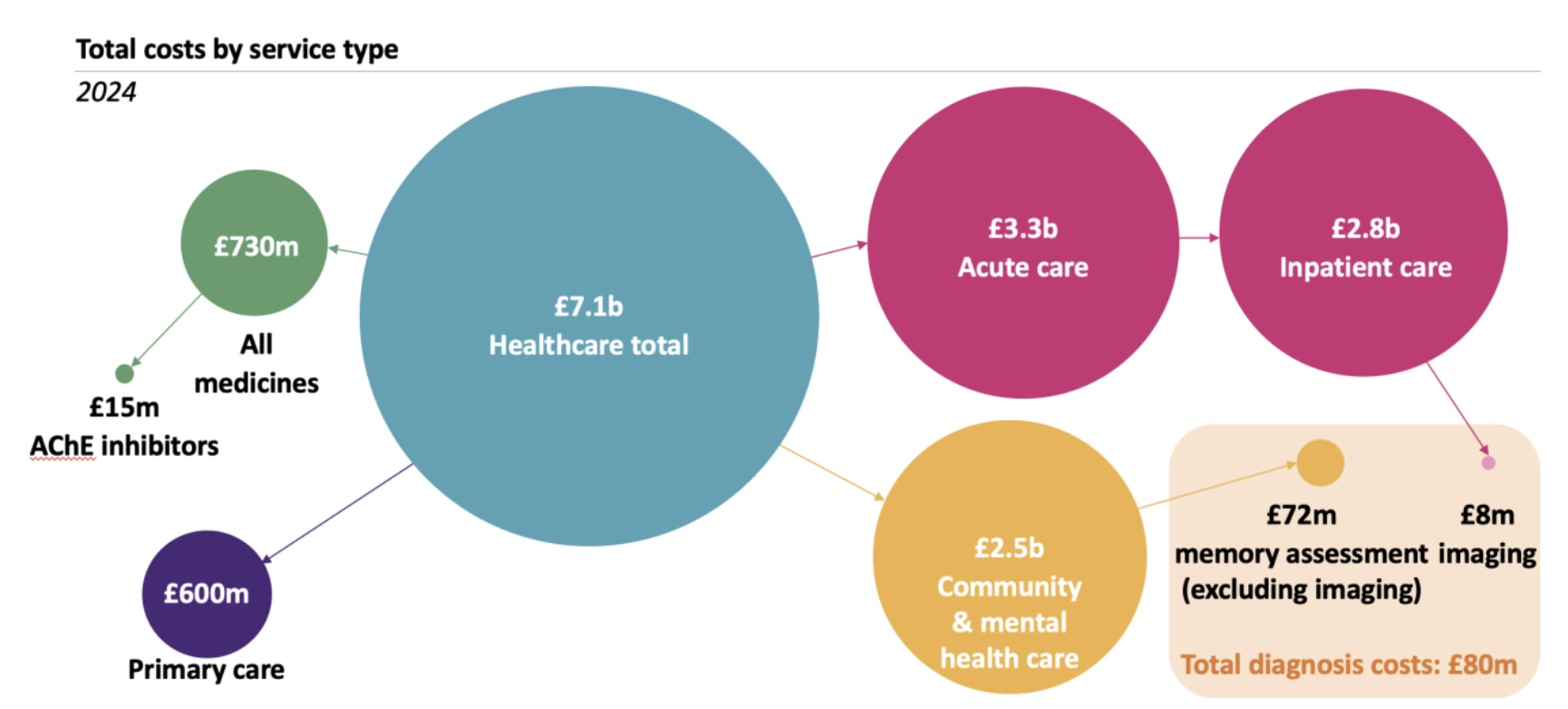
Healthcare costs represent only 14% of total dementia expenditures, with nearly half (£3.5 billion) allocated to secondary care, predominantly driven by non-elective inpatient attendances. Diagnosis and treatment currently account for a minimal portion of costs, with spending on memory assessments and dementia-specific therapies equal to only 1.4% of the total healthcare spend on people with dementia.
The findings of this study suggest an urgent need to improve practices to provide early and accurate diagnosis, improve adoption of current and future therapies, increase support for unpaid carers, ensure social care can meet current and future need, and improve capture of dementia-related data to enable accurate analysis and data-led strategies in the future.
Introduction
Dementia is one of the most common diseases affecting the elderly and given the ageing nature of the UK population the disease poses a significant healthcare, social care, and economic challenge, and highlights the urgent need to prioritise it as a health and care concern. CF was commissioned by the Alzheimer’s Society to quantify the economic burden of dementia, using a new healthcare dataset to bring new insight into the costs of people with dementia now and in the future. The research estimates costs across a broad spectrum of categories and conducts a deep dive into the healthcare utilisation of people with dementia. This report identifies valuable insights into current dementia management and highlights key findings and priorities for future strategies.
The study used one the largest UK studies of healthcare resource utilisation by patients with dementia, with a study cohort of 26,097 dementia patients across North West London. This represents a unique data-led, real-word evidence approach, leveraging linked record-level patient data across primary and secondary care, mental health, community and prescribing to identify real per-person healthcare costs. The study built on Wittenberg, R. et. al. (2019a) and other sources to develop per person costs for social and unpaid care and quality of life and economic costs, which include estimates of private and public spending. These costs were combined with prevalence projections to develop the total cost estimates. Clinical and academic dementia experts were also consulted throughout the work to inform development of the approach, define assumptions, and validate findings.
Dementia prevalence now and in the future
Sources: CF analysis, Comas-Herrera, A. et. al. (2017), ONS. (2020), DiscoverNOW
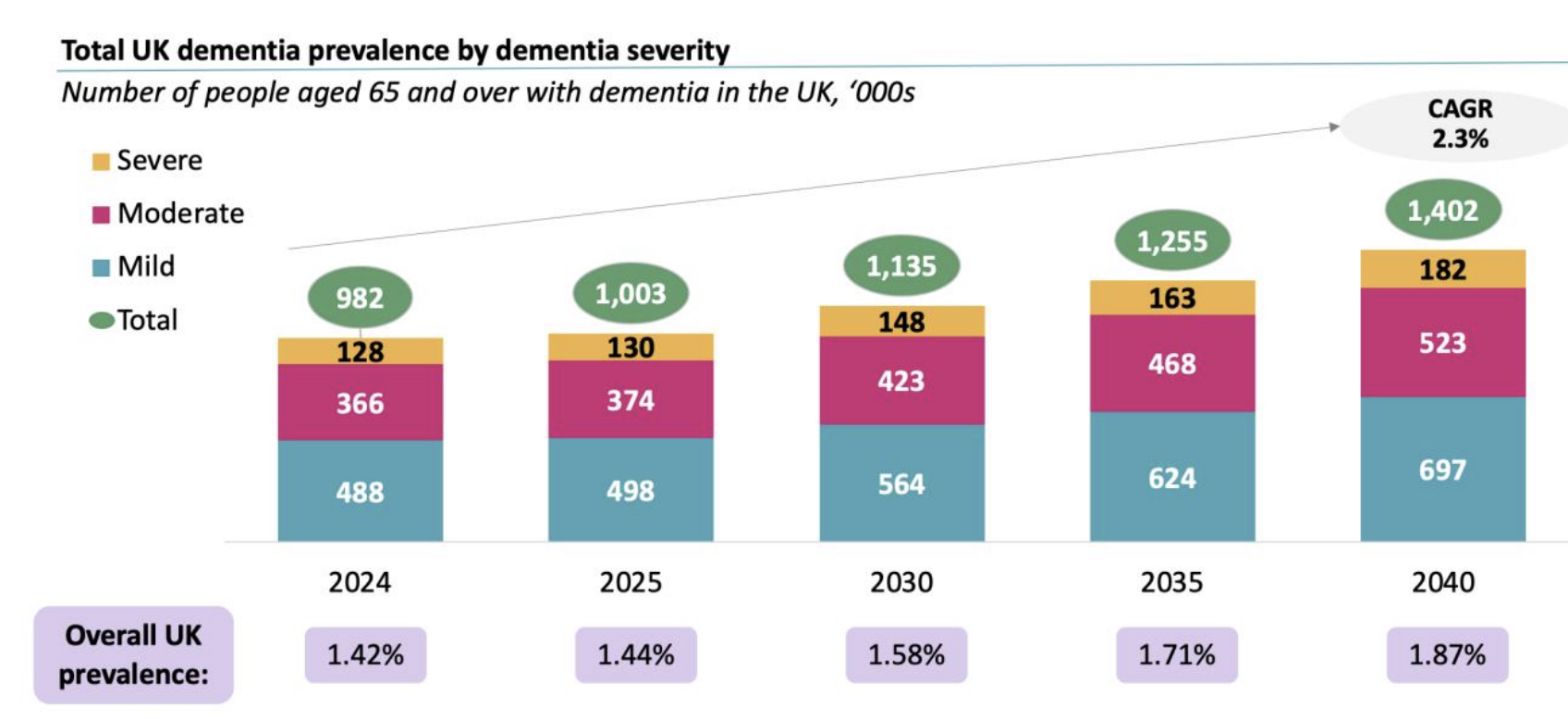
As the UK faces a rapidly aging population, with a substantial increase in the number of older adults projected in the coming decades, the burden of age-related conditions like dementia is also anticipated to rise significantly. The study found that people living with dementia are expected to grow from 982,000 in 2024 to 1.4 million in 2040, with prevalence increasing from 1.4% to 1.9%. The 2040 projection of 1.4 million people living with dementia is lower than previous estimates; this is due to the incorporation of the most recent Office for National Statistics (ONS) population projections, which have been updated in recent years based on revised assumptions regarding birth rates and improvements in mortality rates. Dementia was found to primarily affect the very elderly, with 39% of people with dementia in 2024 and 2040 aged 85 and over.
In line with the projected population distributions, 84% of dementia patients are estimated to live in England, with over 825,000 in England, 80,000 in Scotland, 51,000 in Wales, and 25,000 in Northern Ireland. Regionally, the South West of England has the highest concentration of dementia patients, with 147,000 individuals, accounting for 15% of all dementia cases in the country. London is projected to experience the most significant increase in the number of dementia patients between 2024 and 2040, with a 53% rise to 134,000 affected individuals. Of the 982,000 people with dementia the study found that 50% (488,000) have mild dementia, while 37% (366,000) have moderate, and 13% (128,000) have severe dementia.
The prevalence of diagnosed dementia cases is notably higher among individuals residing in more deprived areas of North West London. While it is challenging to extrapolate this finding nationally, expert opinions suggest that there are likely links between dementia prevalence and deprivation across the country. It is important to note that, in general, individuals from lower socioeconomic backgrounds tend to experience poorer overall health and a greater number of comorbidities compared to those from higher socioeconomic deciles. These observations highlight the potential impact of socioeconomic factors on both the risk of developing dementia and the likelihood of receiving a timely and accurate diagnosis.
Since April 2023, data has been gathered on the demographics of patients listed on GP practice dementia registers, categorised by their residential situation. However, more than 45% of patients lack recorded information regarding their most recent type of residence. This poses a challenge in conducting comprehensive analysis and providing tailored care. Of those patients with recorded data, 65% reside in institutional care settings. Additionally, a very small number of patients are identified as lacking a permanent address, underscoring the complex nature of patient needs.
Cost of dementia now and in the future
Sources: ONS (2020), Wittenberg, R. et. al. (2019b), Comas-Herrera, A. et. al. (2017), DiscoverNOW
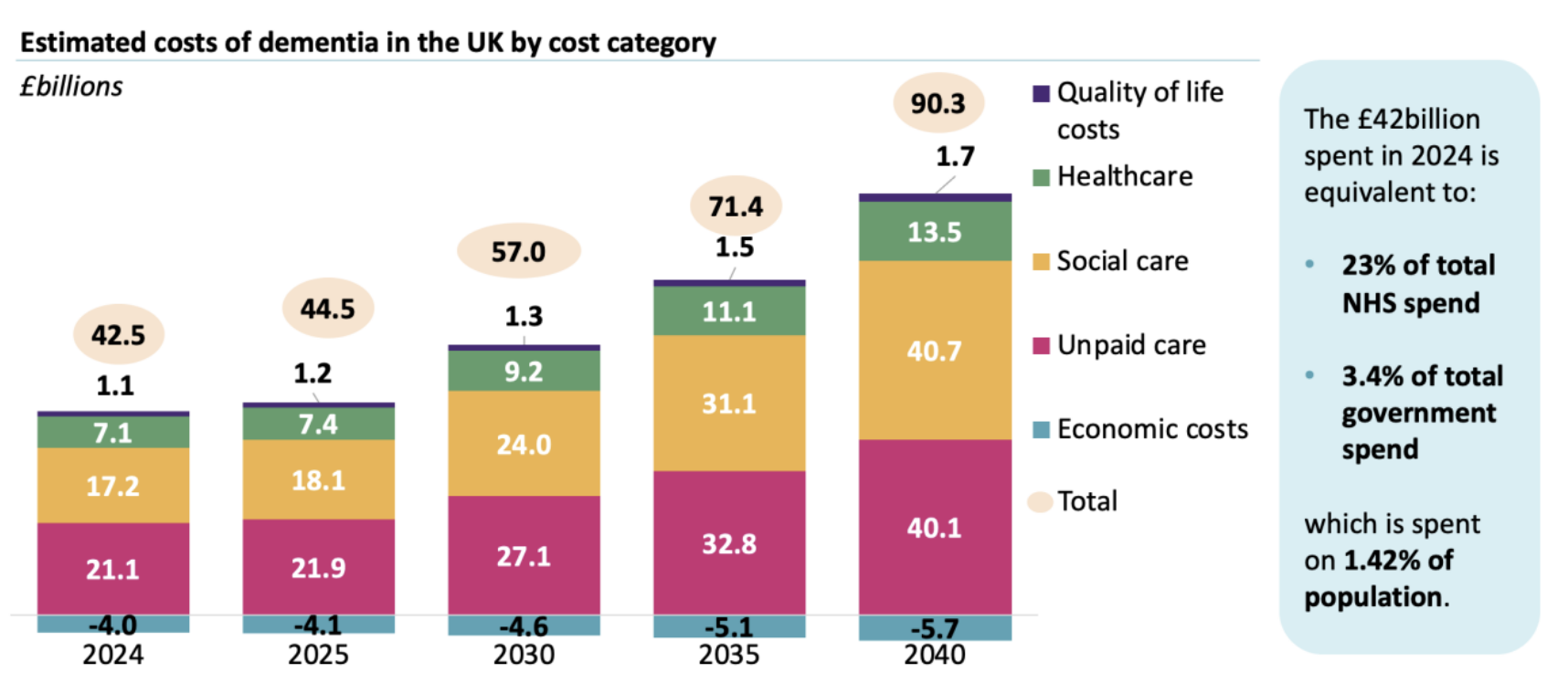
Given the increasing prevalence of dementia over the next 16 years, there is an associated increase in the cost burden of the disease on patients, families, and government. The total cost of dementia in the UK is £42billion in 2024, which is estimated to grow to £90billion in 2040. The £42billion spent in 2024 is equivaled to 23% of total NHS spend and 3.4% of total government spend, which is being spent on 1.42% of the population. Geographically, the costs are distributed across the country in line with dementia prevalence, with 84% of total costs in 2024 occurring in England.
The cost categories are broken down into five categories; quality of life, healthcare, unpaid Care, social care, and economic costs. In 2024 an estimated £4 billion reduction in consumption arises as dementia patients reduce their spending, this decrease in economic activity is factored into the total cost as a reduction in expenditure for people with dementia. Dementia patients, their families, and the state also bear £1 billion in annual quality of life costs, including expenses such as heating homes, greater demand for private transportation among those lacking support, increased police deployment, susceptibility to scams, and legal expenses related to lasting power of attorney arrangements. Social care is the second largest component of cost, £17 billion in 2024, driven primarily by residential care costs, with severe patients accounting for the majority of all costs. Healthcare costs make up the remaining £7 billion of the total £42billion costs of dementia in 2024.
Sources: ONS (2020), Wittenberg, R. et. al. (2019b), Comas-Herrera, A. et. al. (2017), DiscoverNOW
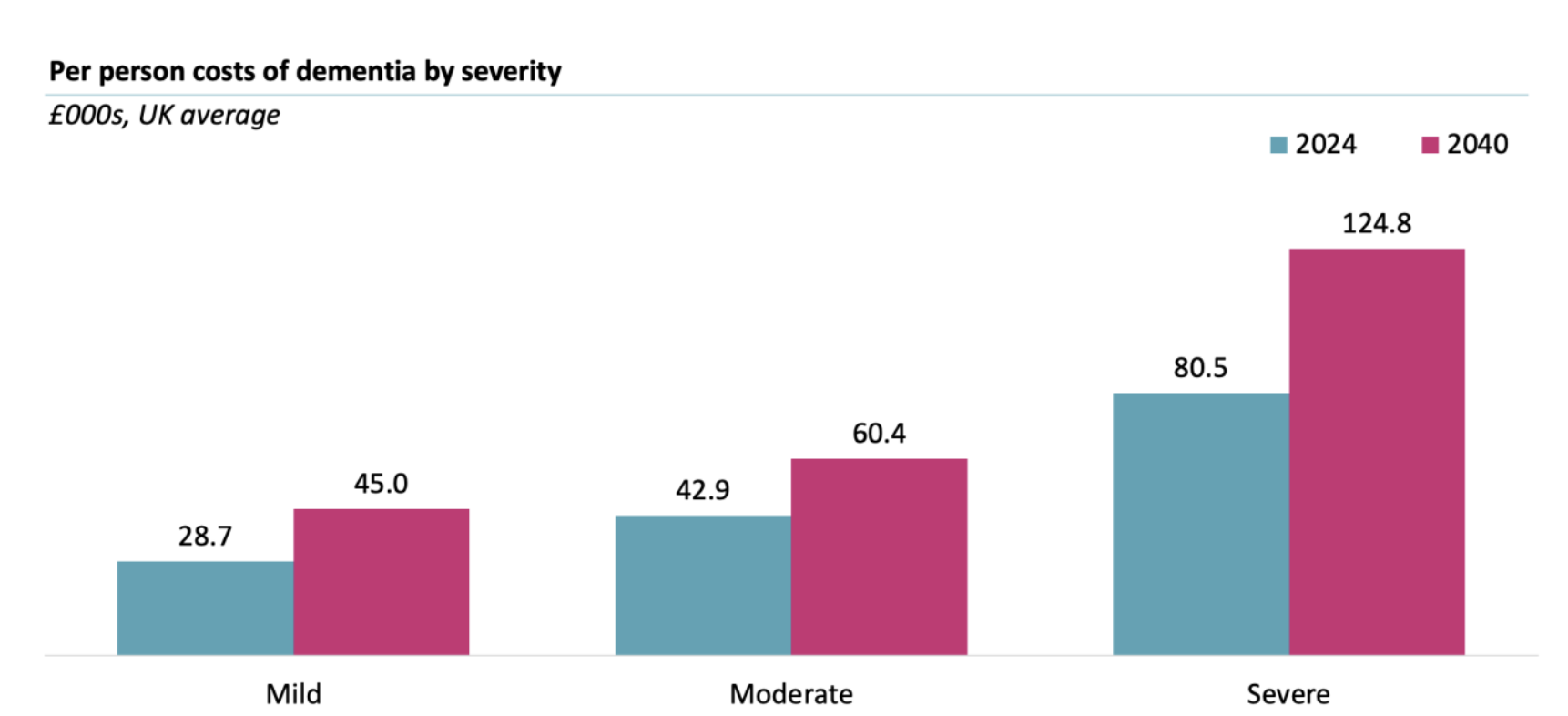
The average cost per patient increases significantly as patients progress through disease stages, with per person costs for mild dementia patients of £28,700 and £80,500 for severe dementia patients. The costs increase at a faster rate as patients advance through dementia stages, with moderate patients being 1.5 times more costly than mild patients, and severe patients nearly twice as expensive as moderate. Among various cost types, social care exhibits the highest per-person cost for both mild and severe dementia, while unpaid care is greater than other costs for moderate dementia.
Social care is the second-largest expense category in dementia costs, primarily driven by residential care costs, particularly for severe patients, who incur the majority of expenses. However, respite care costs remain relatively low due to limited usage by unpaid dementia carers, reflecting a significant lack of support in this area. Projections indicate a substantial increase in residential and nursing home residents by 2040, with nearly half funding their own care, highlighting the financial burden on individuals. Local authority funding for care is subject to stringent criteria and means testing, often leaving individuals responsible for significant contributions, and many patients must fully self-fund their care. With a projected 43% increase in domiciliary care recipients, particularly in the moderate cohort, reliance on independent organisations for home care is high, yet evidence of care quality and consistency is limited.
Implementing strategies to delay the onset of severe dementia symptoms and associated care needs presents a cost-effective approach to managing this patient population. There are currently several treatments that aim to alter the course of disease progression and reduce its substantial impact (known are disease modifying treatments or DMTs) in varying stages of development and regulatory approval.
The costs identified in this study exhibit a slight reduction compared to previous estimates, primarily influenced by lower prevalence projections and a shift in severity distribution. Discrepancies in cost among studies arise from several factors: This study uses 2024 adjusted prices, in contrast to earlier studies using prices from previous years. Moreover, more recent population projections are utilised, reflecting lower estimates compared to earlier projections. Severity distributions are drawn from contemporary datasets, while previous studies relied on different sources, resulting in varying projections of individuals in severe stages and subsequently different cost assessments. Unlike earlier research, this study includes additional costs related to quality of life and economic losses. Differences in assumptions concerning unpaid care hours, social care, and domiciliary care are likely contributors to variations in cost estimations across studies.
Who is covering the costs?
Sources: ONS (2020), Wittenberg, R. et. al. (2019b), Comas-Herrera, A. et. al. (2017), DiscoverNOW
The majority of costs are paid for by people with dementia and their families. Unpaid care is the largest component of dementia costs, at £21 billion in 2024, with cost per-person increasing over threefold as severity moves from mild (£9,700) to severe (£32,300) as cognitive and functional impairment advances with disease progression, meaning there is a growing dependence on care. Individuals with dementia eventually require constant supervision and care, increasing the burden on both patients and their caregivers, predominantly unpaid family, and friends. Despite this significant cost, unpaid care is often overlooked.
By 2040, 43% more people are expected to require unpaid care, reaching a total of over half a million people. Moreover, 36.3% of current unpaid dementia carers have responsibilities for more than one person indicating the significant burden of the disease on carers and family. Around a third of unpaid dementia carers devote over 100 hours per week to caregiving which significantly impacts carer wellbeing, with a majority admitting to neglecting their own needs, and 70% expressing a desire for more support. Despite many carers being retired, the study found that 16% have been forced to leave work, while nearly two-thirds contend with their own health conditions while providing care. Given the large burden of unpaid care and the level of stress and lack of support these carers reportedly feel, policy makers must ensure carers are identified, an assessment is carried out (as per the Care Act) and that appropriate support is subsequently made available.
Healthcare costs of dementia
Sources: ONS (2020), Wittenberg, R. et. al. (2019b), Comas-Herrera, A. et. al. (2017), DiscoverNOW, NHS Digital. (2024), PSSRU. (2023)
The DiscoverNOW dataset allowed the study to investigate in detail how the £7.1 billion of healthcare cost is spent. Healthcare costs make up only 14% of total dementia costs, with over a third of this cost, £3.3 billion, attributed to acute care, principally in inpatient hospital stays. The remaining healthcare spend is on mental health (£1.6 billion), community care (£0.9 billion), medicines (£0.7 billion), and primary care (£0.6 billion). One of the most striking aspects of healthcare utilisation costs was the low spending on diagnostics. Through investigating the volumes of memory assessments and diagnostic imaging, it is estimated total cost of diagnosing dementia in 2024 is £80.1 million, only 1.1% of the total healthcare spend on people with dementia and 0.2% of the total spend. Unlike social care, healthcare dementia costs did not vary significantly as severity increased, with costs at £7,100, £7,500, and £8,000 per-person in 2024 for mild, moderate, and severe patients respectively.
The study also found that dementia-specific treatments, including AChE inhibitors and memantine, constitute 3.0% of total prescribing costs and a negligible 0.05% of all dementia-related expenses. NICE guidance recommends AChE inhibitors for treatment of mild and moderate Alzheimer’s disease.
Recommendations
The study suggests that there is a pressing need to influence policy and drive change across five areas:
Methodology
The cost projections were developed by bringing together updated estimates of dementia prevalence, per-person costs across multiple categories, and forecasts for the expected real-terms price increase.
Dementia prevalence
To calculate the total prevalence of dementia, age-banded and time-varying prevalence rates from the MODEM project were applied to ONS population projections . The prevalence rates are for ages 65+; younger ages were excluded from this study due to low prevalence. The prevalence rates vary by age-band and projection year but are assumed to be constant across genders and geographical area. Distribution of people across the dementia severity cohorts was estimated from the 2,757 dementia patients with MMSE scores recorded in the DiscoverNOW dataset. The distribution was applied to the projected dementia population to develop projections of the number of people in each stage of dementia and was assumed to be constant over time.
Healthcare costs
To calculate total healthcare costs, the per-person costs derived from the DiscoverNOW data were scaled to other areas of the UK and combined with prevalence projections. Six cohorts were developed to understand healthcare costs across different stages of dementia; mild, moderate, and severe dementia patients, people with unclassified dementia, people in the two year pre-diagnosis and a control group without dementia. The cohorts were identified using GP and secondary records of their diagnosis and mini mental state examination results. For the identified cohorts, data describing the healthcare activity and costs across the various care settings was retrieved from the DiscoverNOW database for the period between 2015 and 2022. Historical costs were adjusted for inflation, and activity in 2020 and 2021 was excluded due to the impact of COVID-19. An annual per-person cost in current prices was developed for each dementia cohort and the pre-diagnosed cohort. The per-person cost for each cohort group was extrapolated from North West London to each English region and the devolved nations, using an index based on public healthcare spending.
Other costs
The remaining costs across social and unpaid care, quality of life and economic costs were estimated using assumptions developed from a literature review. The estimates were developed by combining unit costs for each cost type with the expected percentage of the dementia population to the cost applied. The social and unpaid care estimates leveraged previous results from Wittenburg, R. et. al. (2019a), alongside published data on unit costs.
Forecasted real-terms price increase
As in previous studies, the costs in this report are presented in 2024 prices, but projected costs are adjusted for an expected real-terms price increase. Using historical data from the Kings Fund and The Department for Energy Security and Net Zero, an average annual percentage change in real-terms price was developed. The annual percentage increase was applied to the projected costs to adjust for real-terms price increases in unit costs.
Key assumptions
The following assumptions were made as part of this study:
- Prevalence rates from the MODEM project were used, which vary by age band and projection year. The same prevalence rate was assumed across all devolved nations and regions, and all genders.
- The distribution of dementia severity was assumed constant over time and does not vary by age or gender.
- The study assumes that the ratios of people receiving each type of care remain constant over time.
- The study assumes that the diagnosis and treatment approaches remain unchanged throughout the projected period.
- The study assumes the continuation of the current funding systems for the provision of care, and that there will be a sufficient supply of these care streams with no potential shortfall.
Expert input
Clinical and academic dementia experts have been consulted throughout the work to inform the development of the approach, define assumptions, and validate findings. The full list of contributors can be found below:
- Alzheimer’s Society Research Strategy Council
- Professor John O’Brien (Chair) – University of Cambridge
- Dr Paresh Malhotra (Vice-Chair) – Imperial College London
- Dr Joseph Butchart – University of Exeter
- Professor Nick Fox – University College London
- Professor Claire Goodman – University of Hertfordshire
- Professor Barbara Hanratty – Newcastle University
- Dr Li Su – University of Cambridge
- Rosemary Phillips – Research network volunteer and RSC lay representative
- John Major – Research Network Volunteer and RSC lay representative
- Professor Dame Louise Robinson – Professor of Primary Care and Ageing at Newcastle University
Clinical and Economic Experts
- Dr Steve Laitner – GP, Advisory Board Member and Freelance Health Consultant
- Professor Sube Banerjee – Vice-Chancellor for the Faculty of Medicine and Health Sciences, University of Nottingham
- Linda Clare – Chair, Professor of Clinical Psychology of Ageing and Dementia and PenARC Dementia Theme Lead
- Professor Linus Jönsson – Professor, Karolinska Institutet
- Dr Ross Dunne – Consultant Psychiatrist and Clinical Director, Greater Manchester Dementia Research Centre
- Michael Chard – Director of Policy & Analysis, Association of Directors of Adult Social Services
- Philippa Lynch – Partners in Care and Health (joint ADASS/Local Government Association)
- John Jackson – National Care & Health Improvement Adviser Finance
- Raiad Shahzad – Department for Health and Social Care
- Michael Jackson – Program Lead for Neurology and Dementia Intelligence, Office for Health Improvement and Disparities
Expert Reviewers
- Professor Dame Louise Robinson – Academic GP and Professor of Primary Care and Ageing at Newcastle University.
- Annie Williamson – Research Fellow at the Institute of Public Policy Research
- Dr Mani Krishnan – Chair, Faculty of Old Age Psychiatry at the Royal College of Psychiatry, Consultant and Specialty Clinical Director at TEWV
- Raphael Wittenberg – Associate Professorial Research Fellow and Deputy Director of CPEC at LSE and Deputy Director of the Centre for Health Service Economics and Organisation at University of Oxford
Study Team
- Carnall Farrar: Ben Richardson, Dorinda Hickey, Nitasha Dhiri, Dr Bec Gray, Will Fryer, Jennifer Leigh
- Imperial College Health Partners: James Payne-Gill, Moulesh Shah, Dr Benjamin Pierce
References
- DiscoverNOW database. (Accessed 2024). https://discover-now.co.uk
- National Population Projections: 2020-based interim from the Office for National Statistics
- NHS Digital. (2022). Personal Social Services Survey of Adult Carers: England 2021-22. Retrieved from https://digital.nhs.uk/data-and-information/publications/statistical/personal-social-services-survey-of-adult-carers/england-2021-22
- NHS Digital. (2024, January). Primary Care Dementia Data – January 2024. https://digital.nhs.uk/data-and-information/publications/statistical/primary-care-dementia-data/january-2024
- PSSRU (2023). Unit costs of health and social care.
- Wittenberg, R., Hu, B., Barraza-Araiza, L., & Rehill, A. (2019). Projections of older people living with dementia and costs of dementia care in the United Kingdom, 2019–2040. London: Care Policy and Evaluation Centre, London School of Economics and Political Science, 79.
- Wittenberg, R., Knapp, M., Hu, B., Comas‐Herrera, A., King, D., Rehill, A., … & Kingston, A. (2019). The costs of dementia in England. International journal of geriatric psychiatry, 34(7), 1095-1103.