On 8 July 2026 The DHSC released the 10 Year Capital Plan for Health and Social Care, setting out the strategic plan for investment over the next decade, as part of the governments wider 10 Year Health Plan.

This new policy aims to modernise NHS infrastructure and prioritise long-term funding over short-term investment.

The 10 Year Capital Plan is framed around the following key initiatives:

  • Accelerate the shift to community-based care and modernise the estate
  • Overhaul services through technology and digital infrastructure
  • Support prevention, resilience and earlier intervention to improve health outcomes
  • Drive wider government missions including growth, clean energy and housing to be delivered more quickly, efficiently and effectively through a reformed capital regime

See the snapshot for a full breakdown:
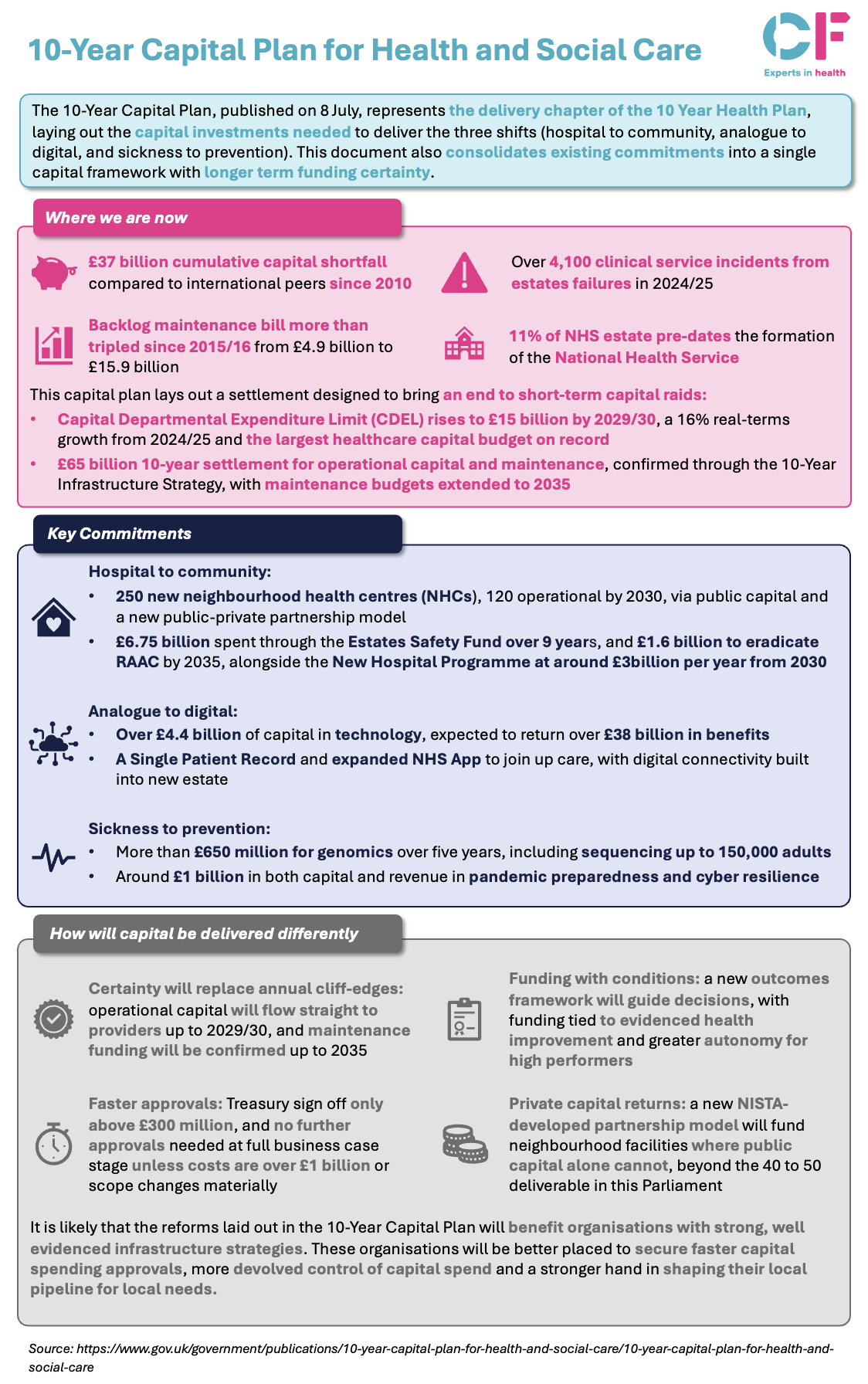
Click to expand

What it means for the NHS

For NHS leaders, the shift to multi-year funding rewards organisations that already hold a strong, well-evidenced infrastructure strategy. They will be best placed to win faster approvals and turn devolved control into schemes on the ground. The outcomes framework raises the bar too: it is no longer enough to show a building is unsafe; systems will need to show what better health the investment buys.

The practical move now is to get the infrastructure strategy investment-ready: a prioritised estate and digital pipeline, tied explicitly to population health outcomes, that can move the moment allocations land. The systems that do this first will shape their local pipeline. The ones that wait will be shaped by it.

To read the full 10 Year Capital Plan, click here.

FAQ’S: Behind the plan

The 10 Year Capital Plan is the government’s long-term programme for investing in NHS buildings, equipment and technology in England. Published by the Department of Health and Social Care on 8 July 2026, it consolidates existing commitments into a single framework and sets out how capital will enable the three shifts of the 10 Year Health Plan: hospital to community, analogue to digital, and sickness to prevention.

The Capital Departmental Expenditure Limit (CDEL) rises to £15 billion in 2029/30, up from £11.5 billion in 2024/25. That is a 16 per cent real-terms increase and the largest healthcare capital budget on record. A separate £65 billion 10-year settlement covers operational capital and maintenance.

The plan commits over £4.4 billion of capital, alongside more than £6 billion of revenue, to technology and digital over the Spending Review period. Beyond a single patient record and an expanded NHS App, it invests in digitising care itself: AI to support clinicians, reduced administrative burden, and digitally enabled hospitals and health centres. The government expects this to deliver more than £38 billion of benefits over the decade.

The NHS backlog maintenance bill has more than tripled since 2015/16, from £4.9 billion to £15.9 billion. The plan commits a minimum of £6.75 billion through the Estates Safety Fund over nine years from 2026/27 to repair hospitals and tackle the backlog, with maintenance budgets now extended to 2035.

The plan raises delegated limits so that Treasury approval is needed only for projects above £300 million. Schemes will no longer need a further approval at full business case stage unless total cost exceeds £1 billion or the scope changes materially. The aim is to cut delays and speed up delivery.

Mostly not. The bulk of the funding was set at Spending Review 2025. The plan’s main change is consolidating commitments into one framework, providing multi-year certainty, and reforming how capital is approved and controlled, rather than adding new cash. To make sure that money is well spent, it introduces a new outcomes framework and makes funding conditional on evidenced health improvement, so investment is judged on the health it buys.

To speak to one of our specialists about our Health Systems services, contact us today.