What is it like to work at CF?
Starting a new role can be both exciting and challenging, and at CF, no two journeys look the same. Two years ago, three of our Analysts wrote about their first few months: the highlights, the challenges, and everything in-between. We kept what they wrote. This year we went back and asked them what has changed from then to now.
Here is what each of them had to say…
What did you do before joining CF?
My first few months at CF have been admittedly stretching, but also exciting and well supported, and – this was a surprise to me – requiring more cardio than anticipated.
I joined the company from a non-healthcare background, studying History at Oxford University and then receiving a fellowship to study an MA in History and Politics at the University of Missouri; the closest I came to medicine was my Atlantic Medicine’s module from 1600-1800 – a tad out of date. After that, I had a few odd jobs until I began working as an intern with the MP for Newcastle Central and West, Chi Onwurah, who was also the Chair of the Select Committee for Science, Innovation and Technology.
How have your first few months been?
Understandably, I was apprehensive about my lack of specific healthcare or life sciences knowledge when I joined, but I was met by excellent teaching and encouragement from my colleagues. The graduate programme provided two weeks of in-house training, covering excel, acronyms, NHS funding, and much more, giving me a solid base to begin my project shadowing. My second month here was spent shadowing a live project, where I undertook tasks alone, but with support from my team around me; I built an operational excel model, which was, after relevant tweaks and iterations, included in the final deliverable to the clients. Additionally, the Analyst cohort receives further training every Friday – we began with excel training, which includes building a projection model and dashboard creation, and we will go on to SQL and Python coding languages.
What is the culture like at CF outside of client work?
Outside of the office, CF has a netball team (the aforementioned cardio), which plays on Tuesdays, October to December. This has been great fun, and a nice way to team bond. There have also been a few socials since I joined, including crazy golf; these have all been very entertaining, and, again, an enjoyable way to get to know the rest of the company.
I’m excited to keep learning and developing my professional skills, as well as expand my wider knowledge of the Healthcare world.
Nearly two years on, what are your main reflections and biggest learnings?
The past two years have flown by, and throughout it all I’ve continued my learning and development journey by gaining exposure to interesting and varied projects, supported by intelligent and considerate colleagues.
I’ve worked on the Population Health Management (PHM) digital programme, a two-fold workstream that required both nuanced stakeholder engagement and a deep understanding of PHM, commissioning workflows, and the direction of government health policy. I also led analysis and research for a national report on prostate cancer screening, aimed at shaping future screening policy, combining data modelling with clinician insight to highlight disparities in access and set out what Prostate Cancer Research recommends to reduce the cost to human life.
Separately, I supported a system redesign of urgent, rehabilitation, and intermediate care pathways, facilitating multi-agency workshops and maintaining engagement across stakeholders with differing priorities. As well as modelling future demand and investment, the work strengthened my analytical ability, requiring refining assumptions with stakeholders and bringing competing viewpoints into a single set of recommendations. Alongside client work, I’ve worked on several major thought leadership pieces, including an article on strategic commissioning, and have also been lucky enough to attend several forum events CF has co-hosted, which allowed me to be in the room as provider group chairs discussed challenges, shared learnings, and debated how the future strategy of acute, community, and mental health providers can develop to keep pace.
My work has improved consistently: I know more about the NHS, the funding flows, the policies, the structures, and, importantly, the people. My key reflection is within that last factor, something CF truly understands: that whilst the data and analysis are undoubtedly integral to making informed decisions, the people in the system are instrumental to change; they know the organisation, the struggles, and can provide a human touch to the data that healthcare will always need.
On the social side, CF has only got better, with even more clubs and societies budgets supporting several initiatives, like games, sports, and book clubs, which I’ve gotten to be a part of.
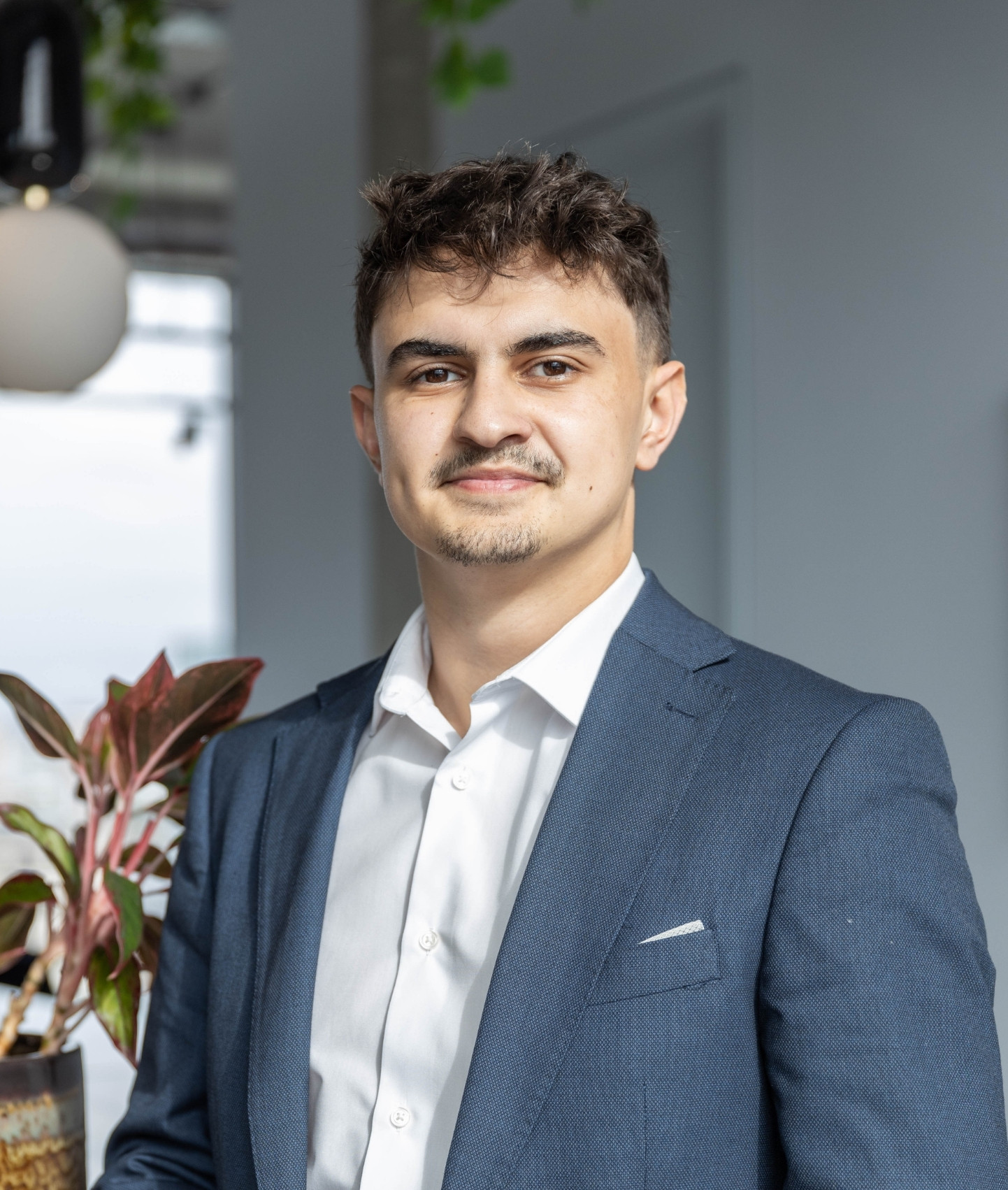
What did you do before joining CF?
Before joining CF, I was completing my master’s degree in aerospace engineering. Starting my journey at CF has been an incredible learning experience, and the past two months have flown by.
How have your first few months been?
From day one, I’ve been impressed by the depth of healthcare expertise within the team. Everyone is not only highly skilled but also genuinely approachable and eager to help. This has made it easy to pick up new concepts quickly, even in such a complex field. My main focus so far has been working on health systems service reviews for the NHS, which has given me great insights into the challenges and opportunities in healthcare. It’s been rewarding to see how our work contributes to improving services for patients.
Looking ahead, I’m particularly excited to dive deeper into Python and start applying it in project work. There’s so much to learn, and the supportive environment here makes it an exciting challenge rather than a daunting one.
What is the culture like at CF outside of client work?
On the social side, CF has an amazing culture. Everyone genuinely gets along, and there are plenty of opportunities to connect through events and activities. Whether it’s grabbing a coffee, attending socials, or just chatting in the office, it’s been easy to feel at home here.
Nearly two years on, what are your main reflections and biggest learnings?
Two years in, the thing I didn’t expect is how quickly you go from learning the sector to owning a piece of the work in it.
Most of my time has gone into analytics for acute and community providers. I’ve worked on an outpatient transformation programme across a group of acute trusts, a driver of the deficit review for a specialist provider, and a sustainability model for children and young people’s therapy services covering a large number of boroughs. Different clients, but a similar question underneath each one: where is the activity going, what does it cost, and what changes if the service is run differently.
On the technical side, I said in my first few months that I wanted to get into Python. I have, alongside SQL and Power BI for the reporting layer. What has made more difference than the tooling is the sector knowledge that sits behind it. Knowing how services are structured, how activity is recorded, and what a clinician would expect to see in the numbers is what turns a query result into something a client can act on.
My biggest learning is that the analysis is the easier half. A model is only useful if the people running the service recognise their own patients in it. The sessions I have got the most from are the ones where a service lead challenged an assumption and we changed it, because the calculation was right and the reality was not. That has changed how I build things: fewer black boxes, and workings a client can open up and argue with.
Socially, it has only got better. There is a proper clubs and societies budget now, and the smaller things matter too. The Friday game at the end of the week is a low effort way of making sure people who haven’t shared a project still know each other.
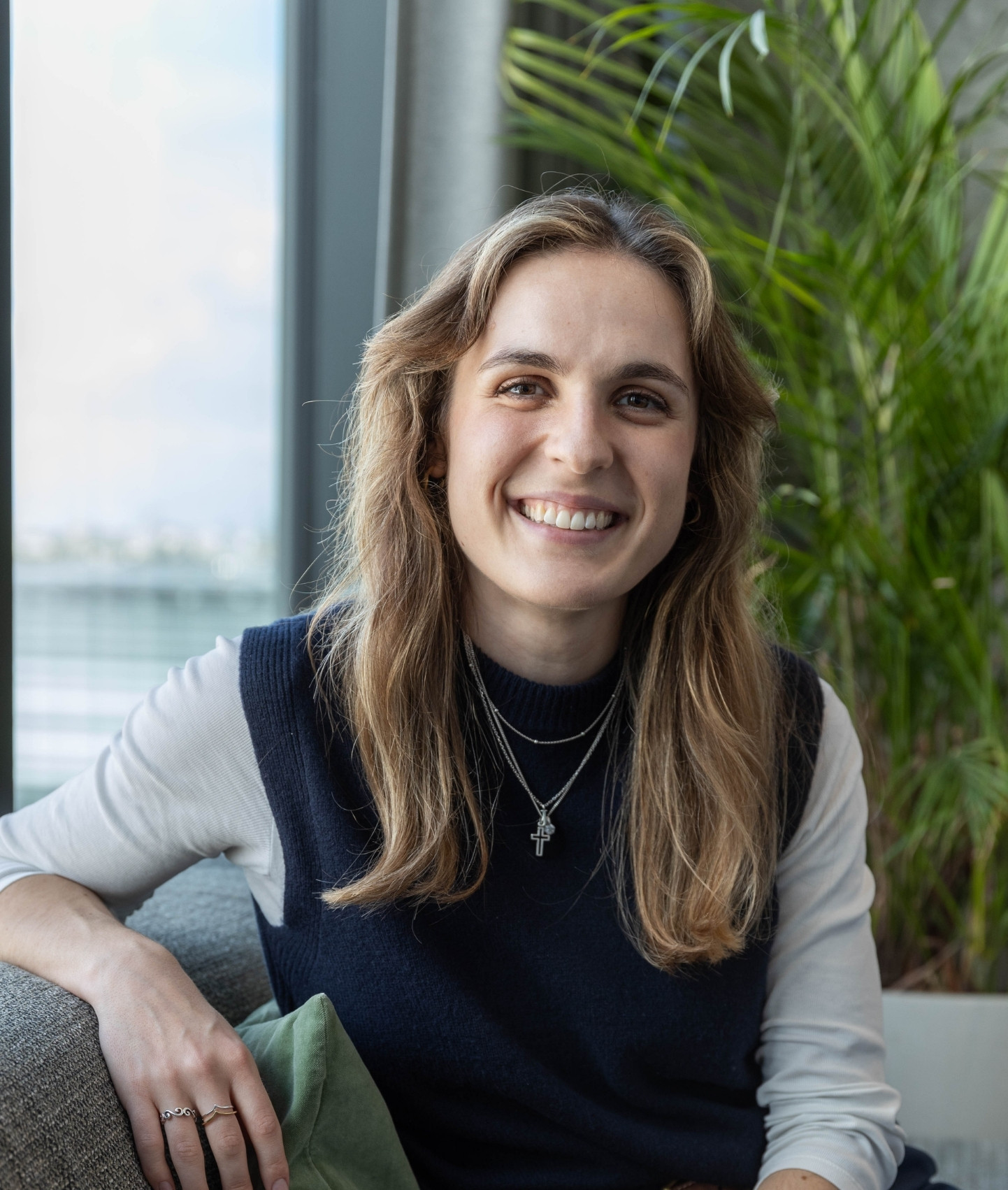
What did you do before joining CF?
I studied at the University of Cambridge, graduating in biological and biomedical sciences in 2019, then medicine in 2022. I worked as a doctor for 2 years, completing my foundation training in summer 2024, then started on the Analyst Programme at CF.
I was drawn to CF as the perfect intersection between management consulting and healthcare, enabling me to leverage my experience as a doctor and continue to pursue my interest in health but from a different angle. The Analyst Programme appealed to me as it offers formal training in skills, I haven’t had the opportunity to build before, including data analysis and modelling using Excel, data management using SQL, and coding with Python. I have loved the challenge of upskilling in data analysis and am excited to apply these in projects in the upcoming year.
How have your first few months been?
I’ve been delighted to discover that the training and support for Analysts extends far beyond the formal data training we get every Friday for the first few months. On joining, our cohort also received a thorough two-week induction to CF, covering the structure of the company, branding and thought leadership, and core management consulting skills. This was followed by several weeks shadowing on a project, providing a non-pressured environment in which to learn and start building these skills on-the-job. I was shadowing an innovative and ambitious life sciences project and, despite being brand new, immediately felt like a valued member of the team. This continued as I moved into the Business Development capacity and then onto an NHS project, showcasing the breadth of work at CF even within the specialism of life sciences and healthcare.
What is the culture like at CF outside of client work?
I’ve been most impressed by the culture at CF, which is astoundingly inclusive and supportive. The sense of camaraderie extends outside of the office too – not only are frequent trips to the local pub after work, but there’s a netball team, run club, book club and even cryptic crossword club, so there are multiple ways to get to know everyone and really integrate into the company.
Nearly two years on, what are your main reflections and biggest learnings?
My first Life Sciences project really threw me in at the deep end. Coming from clinical medicine, I was comfortable with protocol and building an evidence base to make discrete decisions, but for this project we were starting from essentially a blank page, asking what is needed for healthcare innovation on a global scale. It challenged my thinking and showed me the scope of influence and transformation you can have in consulting.
That project won CF’s 2024 Project of the Year, and I’ve taken the learnings into the NHS strategic and operational work I’ve done since. I led a new approach to workforce analysis for an acute trust’s organisational diagnostic, and designed an integrated quality and performance report and a balanced scorecard for another trust’s board. In both, the impact came from meticulous data analysis built on expert NHS contextual knowledge, and strong stakeholder engagement. I’ve been pleasantly surprised by how valuable my NHS experience has been: putting the analysis in context, sense-checking outputs against how services really run, and being able to engage with and relate to clients in interviews. It has become something I particularly enjoy bringing to a team.
I’ve also been delighted to discover a passion for population health management and neighbourhood-based care. I’ve spent much of the past 18 months on a strategic commissioning tool for the Federated Data Platform, and supported the development of HealthStrata, CF’s population health segmentation tool. More recently I’ve been designing a mature neighbourhood health model for two London boroughs. The left shift set out in the 10 Year Health Plan is critical to transforming health and social care in the UK, and I’ve loved working on projects to make it a reality and change how care reaches people where they live.
What I’ve valued most is working somewhere people aren’t only experts in health, but really care about the work. It’s important, impactful and rewarding. If you want to make meaningful change, learn from colleagues who are both knowledgeable and inspiring, and make genuine friendships along the way, CF is a fantastic place to start your career.
Career opportunities at CF
We are committed to setting our graduates up for success from the moment they join our team. By investing in this programme, we’re not only shaping our analysts’ growth but also directly benefiting our clients. The fresh perspectives and enthusiasm our graduates bring to the table enable us to deliver creative, effective solutions to complex problems. Analysts learn on the job, working alongside our teams on real projects, and make fast progress towards the next stage of their careers. The programme is a supportive and motivating environment in which to grow, with in-house and external training available to anyone who takes the initiative.
Applications for our June 2027 and September 2027 cohorts will be open in December.
To learn about our Analyst Programme or hear more from our analysts, visit our Graduate Opportunities page.